Sustainability in tourism is typically discussed through three lenses: economic, environmental, and social. Each is legitimate on its own terms, but separating them creates a distorted picture. In practice, they are deeply interwoven, and nowhere is that more apparent than in the relationship between tourism and the cultures it enters.
The social dimension of sustainability, in particular, cannot be treated as separate from culture. Together, they form what is now called the sociocultural aspect of tourism development, and it may be the most consequential (and the most neglected) facet of modern tourism so far.
This article examines what sociocultural sustainability looks like across the tourism sector. We look at everything from the design of individual properties to the governance frameworks that determine who actually benefits from tourism development.
Key Takeaways
If you're short on time, here's what this article covers:
- Sociocultural sustainability addresses how tourism affects local communities beyond economics, touching on identity, cohesion, cultural continuity, and quality of life
- Mass tourism tends to extract value from destinations rather than reinvest it, often displacing the people and cultures that made those places worth visiting
- Community-driven hospitality, from hotel design to local procurement, is one of the more practical ways the industry is responding
- Equity and inclusion are the fastest-growing areas of sociocultural research in tourism, reflecting pressure on the industry to distribute its benefits more fairly
- Visitors carry responsibility too; how and where you spend matters to the communities you pass through
The Sociocultural Aspect of Sustainability
 The Environmental Protection Agency defines sustainability as creating and maintaining conditions under which humans and nature can exist in productive harmony, meeting the needs of present and future generations.
Applied to tourism, that definition carries significant weight, because tourism is not an abstract industry. It physically occupies communities, consumes their resources, relies on their labor, and interacts with their daily lives.
How it does all of that, with what degree of care, reciprocity, and long-term thinking, determines whether it creates or destroys value for the places it depends on. The sociocultural dimension of sustainability addresses how local communities are affected by tourism, not only economically but in terms of identity, cohesion, and way of life.
It considers both host and guest cultures, and aims for a long-term relationship between them that does not require one to dissolve into the other. This is harder to quantify than carbon emissions or revenue per available room.
A 2025 study published in the Journal of Hospitality and Tourism Management by Costa, Almeida, Chim-Miki and Brandão conducted a systematic review of 237 academic articles and extracted 1,339 sociocultural indicators across seven dimensions: sociocultural atmosphere, community identity, cultural heritage, community facilities, community life, empowerment, and equity and inclusion.
The breadth of that list reflects how much territory the concept covers. Indicators range from rates of community pride and cultural distinctiveness to the availability of mental health services, the percentage of women in management positions in tourism businesses, and whether a destination has protective policies against exploitation and forced labor.
Sociocultural sustainability, in other words, spans the full arc from the intangible to the institutional.
The Problem with Mass Tourism
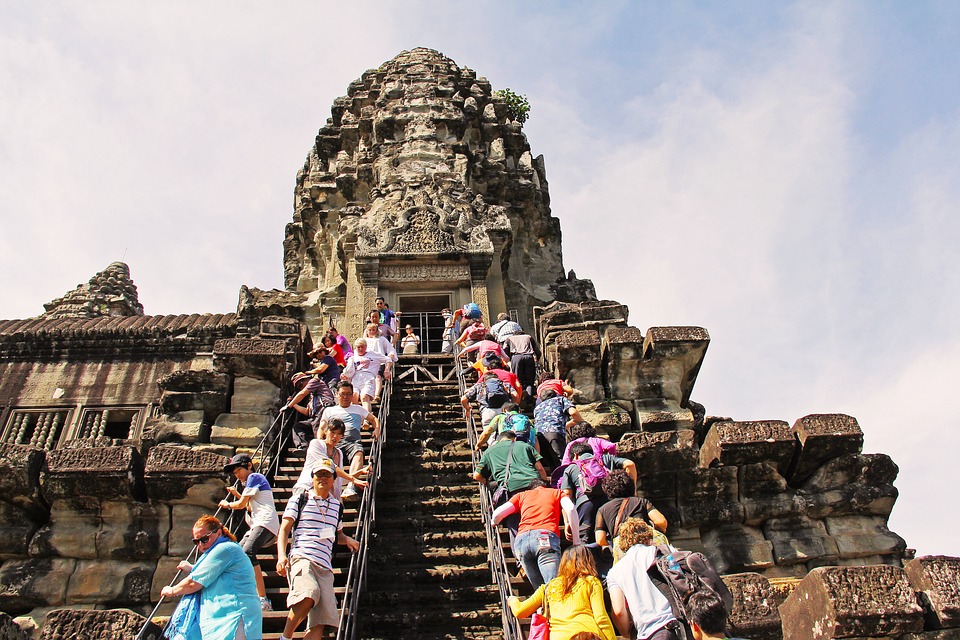 Image: Over tourism problem at Angkor Wat by Good-Travel
The mass tourism model prioritizes volume. Governments in many destinations, particularly developing ones, treat tourism as an export industry, with visitor numbers as the primary performance metric. The consequence is a development logic that favors scale over quality: wider roads, larger hotels, chain restaurants, shopping complexes, and entertainment formats with no meaningful connection to local life.
Land that once supported agriculture gets sold to developers. Young people who might have entered farming or traditional crafts instead study hospitality management for an industry that may not survive the next global disruption. The economic returns can look impressive on paper, but the distribution of those returns rarely reflects the distribution of the costs.
The effects are both tangible and intangible: infrastructure is strained, housing prices rise, often forcing the very people who maintain a destination's character (local artists, craftspeople, independent restaurateurs) out of their own neighborhoods.
The culture that made the place worth visiting gets replaced by a generic version of itself, optimized for tourist expectations rather than local continuity. At this point, a lack of culture becomes the culture. In destinations with indigenous communities, this process can take on a particularly extractive character, with external developers and investors capturing most of the value while the host community absorbs most of the disruption.
Mass tourism can also produce what researchers call economic leakage: money that flows into a destination but exits just as quickly through international hotel chains, imported goods, and foreign-owned operators.
A guest staying at a locally-owned guesthouse, eating at an independent restaurant, and booking through a community-based operator keeps a far higher proportion of their spending within the local economy. Compare that with someone who books through an international platform and stays in a chain property. The difference is not marginal.
Cultural Commodification: Value and Risk

Image: Guana Yala by Go2Sanblas
Some cultures have navigated tourism by converting their traditions into experiences. The Zulu dance has become a major tourism draw in South Africa; shamanistic presentations in Amazonian communities have been packaged for visitors from around the world.
The economic benefit is real, and there is something to be said for the fact that these practices remain alive and visible.
But commodification carries risk. Traditions that survive because they are commercially useful may be stripped of the context that gives them meaning. And communities whose economies become too dependent on tourism become vulnerable when visitor flows drop. The question worth asking is not whether cultural exchange is happening, but on whose terms.
A compelling counter-model comes from the Guna people of Panama, who control an archipelago on the Caribbean coast. Following a history of external investors seizing land and building hotels without community consent, the Guna established legal frameworks that ban the sale or rent of their lands to outsiders.
Since 1996, tourism in their territory has been managed entirely by the community. Leakage is kept intentionally low. This is one of the rare examples of an indigenous group that has managed to integrate tourism into its economy without ceding control of its land, its governance, or its cultural identity.
It is a model that requires political will and legal protection that most communities lack, but it illustrates what genuine community sovereignty in tourism can look like.
Community-Driven Hospitality in Practice
The conversation about sociocultural sustainability is increasingly moving from policy frameworks into design and operations. A growing number of architects, developers, and hoteliers are approaching the question of what a hotel owes its community not as a PR consideration but as a design brief.
David Baker Architects (DBA), a San Francisco-based firm, has developed what they call community-based hospitality, which is essentially a methodology that applies the same community engagement principles used in affordable housing projects to hotel design.
The premise is that a building which responds only to its guests while ignoring its neighbors is incomplete, and that the consequences of that incompleteness fall on the community rather than the developer.
In practice, this means involving the public in the design process from the beginning. For a hotel project in Sebastopol, California, DBA ran workshops that revealed local concerns about artists being priced out of downtown. In response, the firm added subsidized ground-floor studio spaces to the design.
A separately branded hostel was also incorporated to address affordability. These were not gestures of goodwill; they were design decisions driven by people who understood the neighborhood better than any consultant.
Their Harmon Guest House in Healdsburg, California, carries the same philosophy into its physical form. It features the town's only public rooftop deck, a creekside park frequently used for open-air concerts, and a county bus stop integrated into the building's facade. The hotel's event spaces are available to local nonprofits at no charge.
During a major wildfire in 2017, the property opened its rooms to first responders. A forthcoming project, Hotel Sebastopol, is being designed with a Resilience Hub, equipped with solar panels, backup battery systems, clean water, air filtration, and medical refrigeration, to function as a community shelter during natural disasters. The hotel is also on track to be California's first Zero Net Energy property.

Image: Alila Hotels
The Alila brand takes a comparable approach in its Asian properties. Local materials inform construction. Organic gardens and composting systems reduce waste and create visible connections to the land. Partnerships with local families to host dining experiences for guests do something harder to engineer: they create genuine points of contact between visitors and residents, where knowledge and hospitality travel in both directions.
These are not "cultural experiences" in the curated, stage-managed sense, but rather, they are arrangements that allow the village to integrate tourism on its own terms.
The Architecture of Belonging
Beyond individual properties, the broader question is how spaces are designed to create or obstruct a sense of community for guests and residents alike. Design Hotels' Further Forecast 2025 report, produced with SOON Future Studies, identified what it calls Community Capital as an emerging travel priority.
The report found that 84% of respondents believe hotels have the potential to provide a sense of community, yet only 24% actually feel they belong to one. Among Gen Z, 69% said they were more likely to book a property that offered opportunities to meet new people.
These numbers suggest something that hospitality operators would do well to take seriously: the desire for genuine human connection has become a travel motivation in its own right, and the industry has largely failed to meet it. Programming has been the conventional response, but the report's contributors argue that ticking off a cooking class or a guided tour misses the point.
What people are looking for is closer to what Dexamenes Seaside Hotel in Greece has built around its restaurant, dex.Silo.01, housed in a 1920s silo. The space operates as a platform for conversations between artists, scientists, and guests around food sovereignty, cultural heritage, and the legal frameworks that shape tradition.
The hotel also hosts ceramics sessions using wild clay baked in sand, and performative wine tastings designed by Greek artists-in-residence. None of these are incidental to the hotel's identity; they are its identity.
Hotelito at MUSA in Mexico takes an analogous approach through its annual adults-only Summer Camp format, which uses activities, live music, organic gardening, and surfing as mechanisms for rapid social bonding.
The format works precisely because it lowers the social barriers that a conventional hotel stay keeps in place. As one of its founders put it, connecting people with their curiosity is the work, and it does not require significant investment to do well.
Equity, Inclusion, and the ESG Dimension
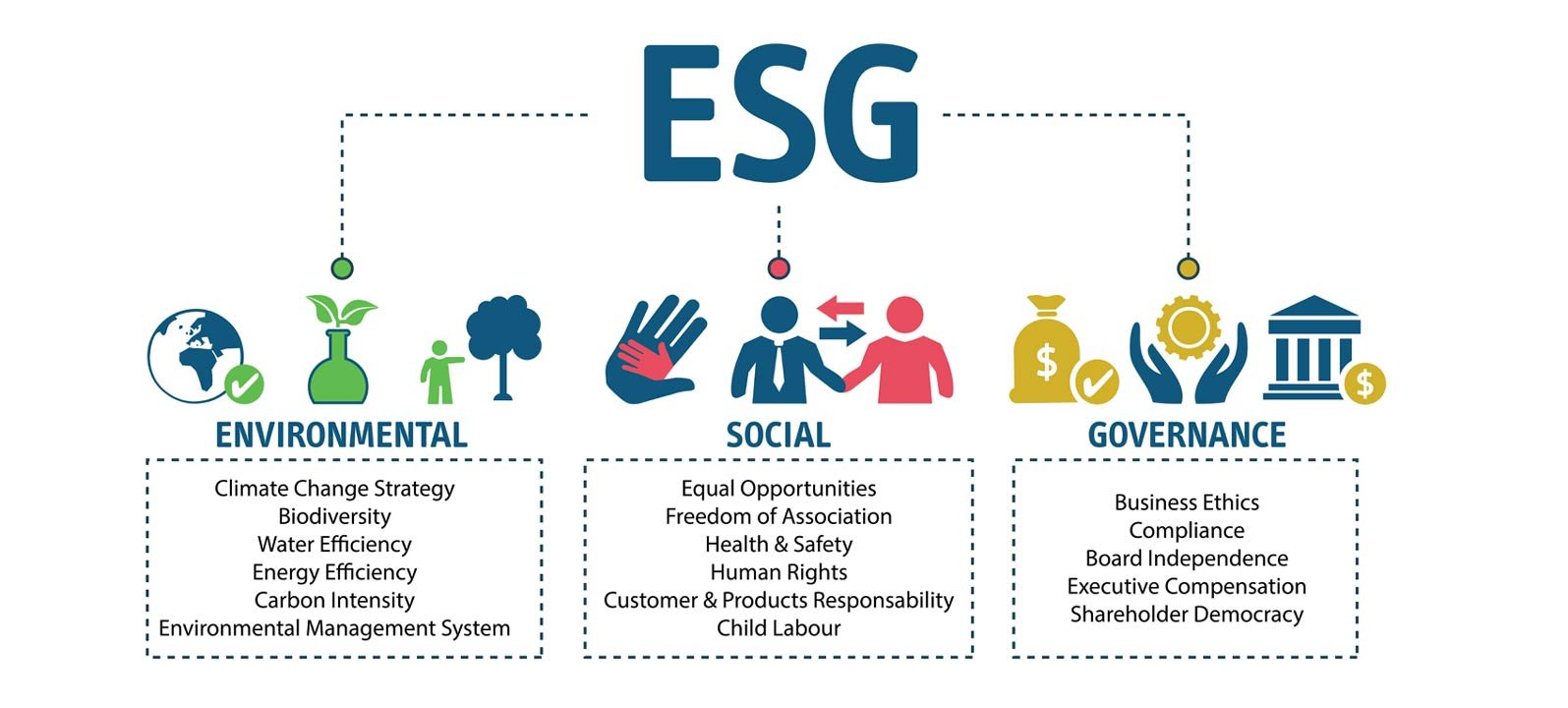
The sociocultural lens intersects directly with ESG in hospitality (environmental, social, and governance) commitments that hospitality companies are increasingly expected to make and report on.
The social pillar of ESG encompasses exactly the territory that sociocultural sustainability covers: labor rights, community impact, cultural preservation, local procurement, and inclusion.
Research tracking the evolution of sociocultural indicators in tourism literature between 2004 and 2023 found that the fastest-growing area of scholarship was empowerment, which increased by 259% across the two study periods.
The second fastest was equity and inclusion, up 237%. Both reflect a broader shift in how the field conceptualizes tourism's relationship to the communities it operates in: away from a model that asks whether tourism is tolerated, and toward one that asks whether it is genuinely beneficial and fairly distributed.
Equity and inclusion in tourism covers a wide range of specifics. At the policy level, it includes protective legislation against exploitation and forced labor, fair access to the economic benefits of tourism, and representation in governance and decision-making.
At the property level, it includes fair wages, safe working conditions, hiring practices that priorities local employment, and support for underrepresented groups in management. On the demand side, it includes the design of spaces and experiences that are genuinely accessible, not only physically, but culturally and economically.
DEI considerations in hospitality extend beyond guest experience. The workforce that delivers that experience is often drawn disproportionately from lower-income local populations, while management and ownership remain concentrated in foreign or urban hands.
Tourism development that takes the sociocultural dimension seriously asks whether the value being created is staying in the community, whether local people have meaningful agency in decisions that shape their environment, and whether the industry is opening pathways for advancement rather than perpetuating hierarchies.
The Visitor's Role
Destinations do not bear responsibility for sociocultural sustainability alone. Visitors play a part too, and that part begins before arrival. Research into a destination's culture, its customs around tipping, dress, interaction with locals, places of worship, agricultural and community spaces, is a form of basic respect that most travelers skip.
Slow travel, the practice of spending more time in fewer places with genuine intent to understand them, is a more sustainable model than the rapid accumulation of destinations. It generates more durable economic benefit for host communities, creates more meaningful experiences for the traveler, and puts far less pressure on local infrastructure and culture.
The Sustainable Agriculture Research and Education (SARE) program, drawing on rural community experience, frames sustainability through the lens of relationships at multiple scales: personal, local, regional, and societal.
Their observation that sustainability is most visible in the quality of people's daily lives, their sense of autonomy, belonging, and fulfillment, translates directly to tourism. The question worth asking of any destination is not whether it is successful by industry metrics, but whether the people who live there are better off because of it.
Society-Centric Tourism
The academic literature has begun coalescing around a concept called society-centric tourism development, which holds that tourism's purpose is to create social value, defined as the positive impacts and legacies it generates for the host community. This frames the relationship between tourism and destination not as extraction but as stewardship.
A destination that is competitive in any meaningful sense is one that can attract visitors while improving the well-being of residents and preserving what makes the place worth visiting in the first place.
That requires moving beyond generic indicators focused on tourist needs and toward a broader set that takes the community as the primary unit of concern. It means measuring not just visitor satisfaction, but community pride, cultural vitality, resident quality of life, equitable access to benefits, and the strength of local governance.
None of these are easy to quantify, but the difficulty of measurement has too often been used as a reason to avoid the question.
What socioculturally sustainable tourism looks like in practice varies by destination. A UNESCO heritage site has different priorities from an urban boutique hotel district or an indigenous community in the Pacific. The indicators and the interventions need to be calibrated accordingly.
But the underlying orientation is consistent: tourism that treats local culture as an asset to be consumed rather than a community to be supported tends, over time, to destroy the very thing it depends on.
FAQs
Sustainability means different things depending on who you ask and which part of the system you're looking at. The term gets used across urban planning, corporate reporting, tourism development, and community advocacy, often with slightly different emphases in each context.
These questions come up often, and for good reason; the terminology can feel slippery. If you've found yourself Googling any of these, here are the straightforward answers.
What are the 5 principles of social sustainability?
There is no single universally agreed-upon list, but the principles most commonly cited across sustainability research and policy frameworks are:
- Equity: Fair access to resources and opportunities
- Diversity: Recognition of the value of cultural and social differences within a community
- Social cohesion: The strength of relationships and trust within a group
- Quality of life: Health, safety, and general well-being
- Democracy and governance: How communities participate in decisions that affect them
What is an example of a sociocultural environment?
A sociocultural environment is the combination of social structures and cultural norms that shape how people in a given place live, interact, and make meaning. A useful example is a traditional fishing village that becomes a tourism destination.
The village has its own rhythms: seasonal work, community gatherings, shared customs around food and celebration. When tourism arrives, new economic relationships form, outside influences enter, and the community has to navigate what to preserve and what to adapt. The village, in flux, is the sociocultural environment.
What are the 4 types of sustainability?
The four types of sustainability are most commonly broken down as follows:
- Environmental: protecting natural systems, biodiversity, and resources so they remain viable for future generations
- Economic: ensuring that growth and development generate lasting value rather than short-term returns that deplete what they depend on
- Social: maintaining the well-being, equity, and cohesion of communities over time
- Cultural: preserving the traditions, languages, and practices that give communities their identity and sense of continuity
Bringing It All Together
Sociocultural sustainability in tourism won't be solved by any single hotel, policy, or traveler. Progress depends on every part of the system taking it seriously. Operators, developers, governments, and visitors included. As Michel Rochat, CEO of EHL Group, puts it:
"Contributing beyond education encourages the EHL community to give back to society by driving sustainable change wherever they live and work, both during and after their education. This is a strong call to action that should empower each of us to do more and play our part in making the world a fair, ethical and sustainable place".