
Eco-conscious travelers are reshaping the hospitality industry, and what they're looking for has grown considerably more specific. A recycling bin in the room and a card asking you to reuse your towel no longer moves the needle.
The market has matured, and so have guest expectations. A 2023 Booking.com study found that 76% of travelers would be more likely to book a hotel with green certification, and 43% would pay a premium for it.
The financial case for genuine sustainability is clear. What's less clear, for many hotel operators, is exactly what genuine sustainability looks like in practice, and how to pursue it without overstating what you've actually achieved.
The answer the industry has been converging on is net zero, and it comes with a more rigorous definition than most of the sustainability language that preceded it.
Why "Sustainable" Needed a Sharper Definition
The hospitality industry's sustainability conversation has, for years, been plagued by greenwashing. Hotels have made broad environmental claims that don't survive scrutiny, and the result has been a slow erosion of guest trust at precisely the moment when that trust carries real revenue implications.
The problem, in most cases, isn't bad faith. It's the absence of a consistent framework that tells operators what to measure, what to commit to, and how to report it honestly.
Net zero fills that gap. In 2023, Greenview, the World Travel and Tourism Council, the Pacific Asia Travel Association, and the Sustainable Hospitality Alliance published the second edition of the Net Zero Methodology for Hotels, a freely available, comprehensive framework built specifically for the hotel industry.
It defines net zero as the point at which emissions are reduced to an absolute minimum and any remaining emissions are addressed through verified carbon removals and offsets. The target year, consistent with the Paris Agreement, is 2050 at the latest, with 2040 considered an achievable goal at the organizational level.
What distinguishes this framework from softer sustainability commitments is specificity. It tells you which emissions to measure, in what order to prioritize them, what milestones to hit by which years, and how to disclose your progress in a way that holds up to scrutiny.
It also situates hotel decarbonization within the broader context of the United Nations Sustainable Development Goals, recognizing that a hotel's environmental footprint touches SDGs ranging from Affordable and Clean Energy (SDG 7) to Clean Water and Sanitation (SDG 6) to Responsible Consumption and Production (SDG 12).
For hotel operators looking to make credible claims, that structure is exactly what's been missing.
Understanding Your Actual Emissions Footprint
 Before a hotel can set a net zero target, it needs to understand the full scope of what it's responsible for. The methodology organizes emissions into three scopes, following the Greenhouse Gas Protocol.
- Scope 1: Covers direct emissions from sources the hotel owns or controls, primarily fuel combustion for heating and cooking.
- Scope 2: Covers indirect emissions from purchased electricity.
- Scope 3: Covers everything else in the value chain, and this is where most operators underestimate their footprint.
Energy costs account for up to 60% of a hotel's carbon emissions, so Scope 1 and 2 are the obvious starting point.
But the methodology identifies upstream emissions from food and beverage purchasing, outsourced laundry, waste disposal, employee commuting, and embodied carbon in building materials as significant contributors that operators are expected to quantify and address over time.
The framework assigns each category a priority classification, from Very High to Low, so operators know where to focus first rather than feeling overwhelmed by the full inventory.
There's also an important distinction between what hotel owners are responsible for and what operators are responsible for.
Owners carry accountability for the physical building, including its embodied carbon, the materials used in development and renovation, and major capital equipment.
Operators carry accountability for the activities of guests and staff, including food and beverage purchasing, waste generation, and outsourced services like laundry. In practice, both parties need to be working toward net zero together, even where their specific responsibilities differ.
Energy Efficiency: Reduce Before You Replace
The methodology is clear that energy efficiency comes before renewable energy procurement in the sequence of decarbonization actions, and this reflects a straightforward logic. Generating clean energy for an inefficient building is more expensive and less effective than reducing the building's energy demand in the first place.
Progress here also contributes directly to SDG 7, which calls for a substantial increase in the share of renewable energy globally and a doubling of the rate of improvement in energy efficiency.
Gerry Wallace, Managing Director of Greenline, a design and construction firm specializing in outdoor spaces, makes this point from a design perspective. "Swapping in efficient appliances and LEDs is a given," he says, "but the bigger impact comes from reducing how often guests need to use them in the first place."
The approach centers on design choices that work with natural conditions rather than against them. "Natural airflow paths or layouts that maximize daylight can cut power draw at the source."
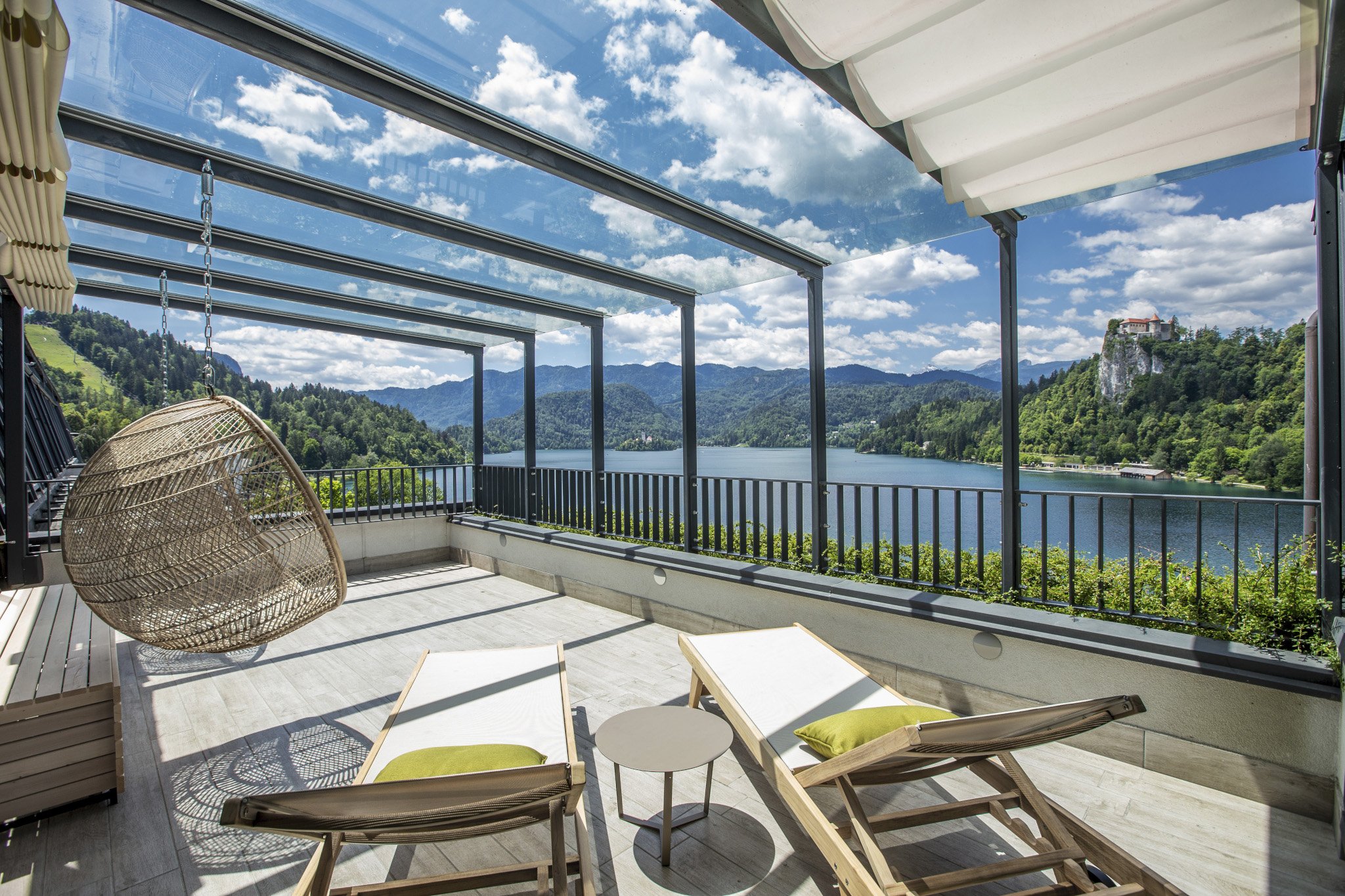
Wallace's outdoor work illustrates the principle well. "Adding a simple shade to an outdoor space creates a haven where guests actually want to be," he notes, one that is "naturally cooler and lit by daylight," reducing reliance on air conditioning or artificial lighting.
These shaded areas "also make external spaces more usable year-round, so guests naturally spend less time indoors where energy demand is higher."
The methodology sets concrete targets here. Hotels should be working toward cumulative energy intensity reductions of at least 10% from their baseline by 2025, 20% by 2030, and 30% by 2040. Once efficiency improvements are underway, the transition to renewable energy sources becomes the next priority.
By 2030, hotels in mature markets, defined as those with established renewable energy infrastructure, are expected to be sourcing 100% of their electricity from renewables. Options include on-site solar generation, power purchase agreements, and renewable energy certificates.
Water, Waste, and the Broader Operational Picture

Hotels consume between 400 and 1,500 liters of water per room each day, with guest rooms, food and beverage operations, and kitchens accounting for the bulk of that usage.
Water costs represent around 10% of the average utility bill, and with 40% of the global population facing water scarcity, conservation sits squarely within the ambitions of SDG 6, which calls for universal access to safe water and sanitation and the protection of water-related ecosystems.
For hotel operators, the challenge lies in reconciling guest expectations of abundant, effortless water access with the growing urgency of responsible use.
The good news is that water conservation and guest satisfaction are not in tension. Low-flow fixtures, smart irrigation systems, and water recycling programs can reduce consumption significantly without any perceptible drop in the guest experience.
Towel reuse programs, when framed well, tend to be received positively by guests rather than as an imposition. The key is to present them as a genuine operational commitment rather than a cost-cutting measure dressed up in green language.
Water heating, it's worth noting, sits directly within a hotel's energy footprint, so water efficiency improvements contribute to carbon reductions as well as utility savings.
Waste is formally part of the net zero boundary under the methodology, classified as a High priority Scope 3 emission source. Hotels are expected to have waste emissions accurately measured with a baseline set by 2025, and to be demonstrating year-on-year reductions in waste emissions intensity from 2030 onward.
This connects to SDG 12, Responsible Consumption and Production, which calls for the substantial reduction of waste generation through prevention, reduction, recycling, and reuse. Operators need to start collecting reliable waste data now if they haven't already, including data on disposal method, since landfill and incineration carry very different emissions profiles.
Net Zero Timeline
The methodology structures the journey to net zero around five yardstick years, each with specific milestones. For operators trying to understand what's actually expected of them, the progression looks like this.
By 2025, the expectation is that hotels have made a formal net zero commitment and disclosed a plan. This doesn't mean everything is solved, but it does mean the baseline is set, the emission categories are identified, and there is a documented strategy for each of them.
Scope 1 and 2 emissions should be showing meaningful progress, and supplier engagement on Scope 3 should be underway.
2030 is the most significant milestone in the framework. It's the year by which all electricity in mature markets should be coming from renewables, and by which hotels should be able to demonstrate emissions intensity reductions of around 45 to 50% from their baseline.
Carbon offsetting, used carefully and transparently, can address residual emissions that can't yet be eliminated, but the methodology is explicit that offsetting is not a substitute for genuine reductions.
Importantly, the methodology recommends that offset projects align with the SDGs, particularly those that deliver tangible economic benefits to local communities and protect natural and cultural heritage in the destinations where travelers are staying.
This transforms offsetting from a simple accounting exercise into something with genuine value for the places hotels depend on.
By 2035, the renewable electricity transition should be complete across all markets, and the focus shifts to value chain decarbonization: working with suppliers, embedding net zero requirements in contracts, and making progress on the harder-to-quantify Scope 3 categories like embodied carbon and purchased goods.
By 2040, hotels should be in a position to make credible net zero claims for the emissions of the building itself, with all remaining fuel sources quantified and offset. The 2050 deadline covers the full value chain, with all significant emission sources heavily reduced and any residuals minimized, quantified, and offset where no viable alternative exists.
Throughout this timeline, the methodology recognizes two types of targets: performance targets, which are quantifiable and tied to specific thresholds, and process targets, which capture the actions that support decarbonization even when the numbers aren't yet fully measurable.
Engaging suppliers, training staff, embedding sustainability criteria into procurement decisions, and offering guests eco-friendly activities that connect them with the destination's environment all count as meaningful progress. For operators who feel daunted by the quantitative side of net zero, this is worth emphasizing. The methodology rewards action, not just measurement.
Transparency as the Antidote to Greenwashing
 Returning to where we started: the risk of greenwashing hasn't gone away with the adoption of net zero language. If anything, it has evolved.
The new version of the problem is hotels making net zero claims without the evidence to back them up, announcing targets without disclosed baselines, or using carbon offsets to claim neutrality while underlying emissions remain unaddressed.
The methodology's reporting requirements are designed to prevent exactly this. Hotels are expected to publish annual disclosures covering total Scope 1, 2, and 3 emissions by category, emissions intensity per square meter, percentage of energy from renewables, and a clear account of any offsets used.
Alongside the numbers, disclosures should explain the methodology behind the calculations, note any assumptions or exclusions, and indicate which figures have been externally verified.
This level of transparency serves operators as much as it serves guests.
A hotel that can point to a documented baseline, a credible plan, and year-on-year progress has something genuinely valuable to communicate, and a growing pool of travelers, investors, and corporate travel buyers who are equipped to recognize it. That's the difference between a sustainability claim that builds lasting trust and one that quietly undermines it.
The Net Zero Methodology for Hotels is freely available, and its own deadline for hotels to have made a commitment and disclosed a plan is 2025.
For operators who haven't yet started that process, the window is narrowing, not because a deadline demands action, but because the industry is moving and the guests, investors, and partners who matter most are increasingly able to tell the difference between hotels that are serious and those that are not.
FAQs
Sustainable hotel management raises plenty of questions, and not all of them have tidy answers. Some are technical, touching on carbon accounting and emissions frameworks that most operators didn't train for.
Others are more skeptical, asking whether the tools and certifications the industry leans on actually hold up. Below are some of the more common questions that come up when hotel owners and operators start taking net zero seriously, answered as plainly as possible.
What’s the difference between net zero and carbon negative?
Net zero means your greenhouse gas emissions are reduced to the lowest achievable level, with any remaining unavoidable emissions balanced by an equivalent amount of carbon removed from the atmosphere.
Carbon negative goes a step further: your removals exceed your emissions, meaning you're pulling more carbon out of the atmosphere than you're putting in. Microsoft's commitment to become carbon negative by 2030 is probably the most cited corporate example. For hotels, net zero is the realistic and recognized target.
Are carbon offsets snake oil?
Not inherently, but the market has earned its skepticism. The core problem is quality. A poorly designed offset project can overstate its impact, reverse over time, or simply shift emissions elsewhere rather than eliminating them.
That said, well-structured offsets verified by credible standards do represent real carbon removal or reduction. The Net Zero Methodology for Hotels is clear that offsets should supplement genuine emissions reductions, not replace them, and recommends prioritizing projects that deliver measurable benefits to local communities in the destinations hotels operate in.
What country has the cleanest hotels?
This is harder to answer definitively than it might seem, because "cleanest" depends on what you're measuring. A hotel in Norway or Iceland benefits from an electricity grid that runs almost entirely on renewables, which dramatically lowers its carbon footprint before it's made a single operational decision.
Countries with mature renewable energy markets give hotels a structural head start. Beyond the grid, certification rates vary widely by region. Scandinavia and parts of Western Europe consistently lead on both counts, though standout properties exist everywhere.
Is there such a thing as a “verified” net zero hotel?
Yes, though the bar is higher than most green certifications. A credibly verified net zero hotel would need a documented baseline, audited emissions data across Scope 1, 2, and relevant Scope 3 categories, demonstrated reductions over time, and any remaining emissions addressed through independently verified carbon offsets.
Frameworks like the Science Based Targets initiative and ISO 14064 provide the verification architecture. In practice, very few hotels have cleared every hurdle, but the number is growing as the methodology and the auditing infrastructure around it matures.
What is the biggest expense for a hotel?
Labor, by a considerable margin. Staffing typically accounts for 30 to 35% of a hotel's total operating expenses, covering everything from front desk and housekeeping to food and beverage operations. Energy comes second, representing around 3 to 6% of operating costs depending on the property type, climate, and building age.
Water sits at roughly 10% of the average utility bill. The reason energy gets disproportionate attention in sustainability conversations is that it's also the largest single contributor to a hotel's carbon emissions, accounting for around 60% of the total footprint.
Looking Ahead
Sustainable hotel management is becoming more structured, more data-driven, and more closely tied to broader climate goals. Net zero provides a framework that brings these elements together.
For hotels, the challenge is less about identifying what needs to be done and more about implementing it in a consistent and practical way. Energy use, water management, sustainable supply chains, and operational practices all contribute to the outcome.
Those that approach this with clarity and discipline will be better positioned to meet guest expectations, satisfy corporate requirements, and adapt to regulatory changes.
Carbon-positive ambitions may still have a place in the conversation, but they sit beyond the immediate priority. Establishing a credible net zero pathway is the foundation. Everything else builds from there.