
Profit, People, Planet: the triple bottom line “Holy Grail” that many companies preach, but how many practice it?
Over the last decades, governments and corporations alike have been pledging their commitment to fighting climate change and building a more inclusive society. On the environmental front, the landmark 2015 Paris Agreement promised to unite the world around a single goal: achieving carbon neutrality by 2050.
But the reality has not matched the rhetoric. Since the Agreement was signed, global banks have financed a staggering USD 7.9 trillion in fossil fuels, with 2024 alone accounting for $869 billion, a $162 billion increase on the prior year.
The hospitality industry is not guilt-free either. According to UK data, while energy consumption per unit of economic output in the overall UK economy fell by 53% over the last three decades, the accommodation sector saw the opposite trend: a 10% increase in energy usage.
Travel and tourism is expected to keep growing, which means our responsibility to the global ecosystem will only deepen. The key question is: how can we make bigger strides for our People and Planet? To many, the answer is “ESG”.
In this article, we explore state of ESG in the hospitality industry and understand its role in hotel asset life cycles.
What Is ESG?
In recent years, similar to how CSR was once the poster child of the corporate world, the term ESG has earned itself somewhat vogue-status: the purported gold standard for striving towards a sustainable future.
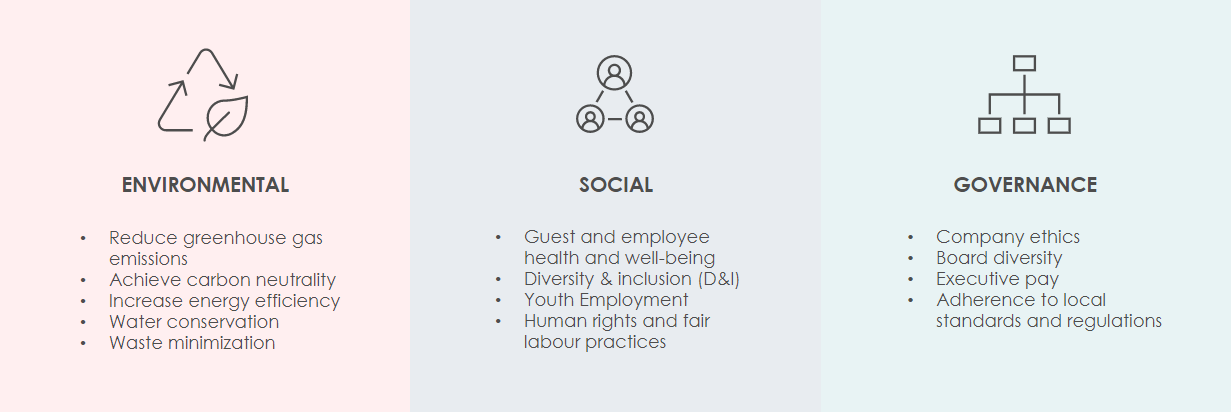
ESG stands for Environmental, Social, and Governance: three broad pillars through which a company's impact on the world, and its internal accountability structures, can be assessed.
Originally developed as a framework for investors to evaluate non-financial risks, ESG has since evolved into a comprehensive blueprint for how businesses across all sectors, including hospitality, approach sustainability and ethical practice.
But to reach that final step of becoming ESG-compliant, we first need to understand what it means in practice. In this regard, there are two crucial considerations in deciphering the word “ESG” for hotels:
- An imbalanced scale: The “E” in ESG often hoards the limelight. While environmental needs are undeniably the most pressing (and efforts in this area are more measurable), social and governance factors are equally important pieces to the ESG puzzle.
- An extensive scope: ESG goes far beyond simply installing energy-efficient LED lights. Across the span of a hotel's life cycle, from its development to the eventual sale of the hotel asset, ESG measures can play a different role at each stage, all of which warrant careful consideration.
Role of ESG in the Hospitality Industry
The WTTC reports that in 2024, travel and tourism contributed USD 10.9 trillion to global GDP, representing 10% of the world economy, and supported 357 million jobs, or roughly 1 in 10 worldwide. Few industries carry that kind of economic weight, and with scale comes scrutiny.
For hospitality, that scrutiny is well-founded. Hotels are resource-intensive by nature: they consume vast amounts of energy and water, generate significant waste, employ millions of people across vastly different labor markets, and operate within communities whose cultures, ecosystems and livelihoods they directly affect.
At the same time, the industry's fragmented ownership structure, where a single brand may span owner, operator, franchisor and developer across thousands of properties, makes consistent ESG implementation both more complex and more consequential than in most sectors.
Understanding ESG in hospitality therefore means looking beyond the headline commitments. Below, we examine each of the three pillars in turn and explore what they mean in a hotel context.
Environmental
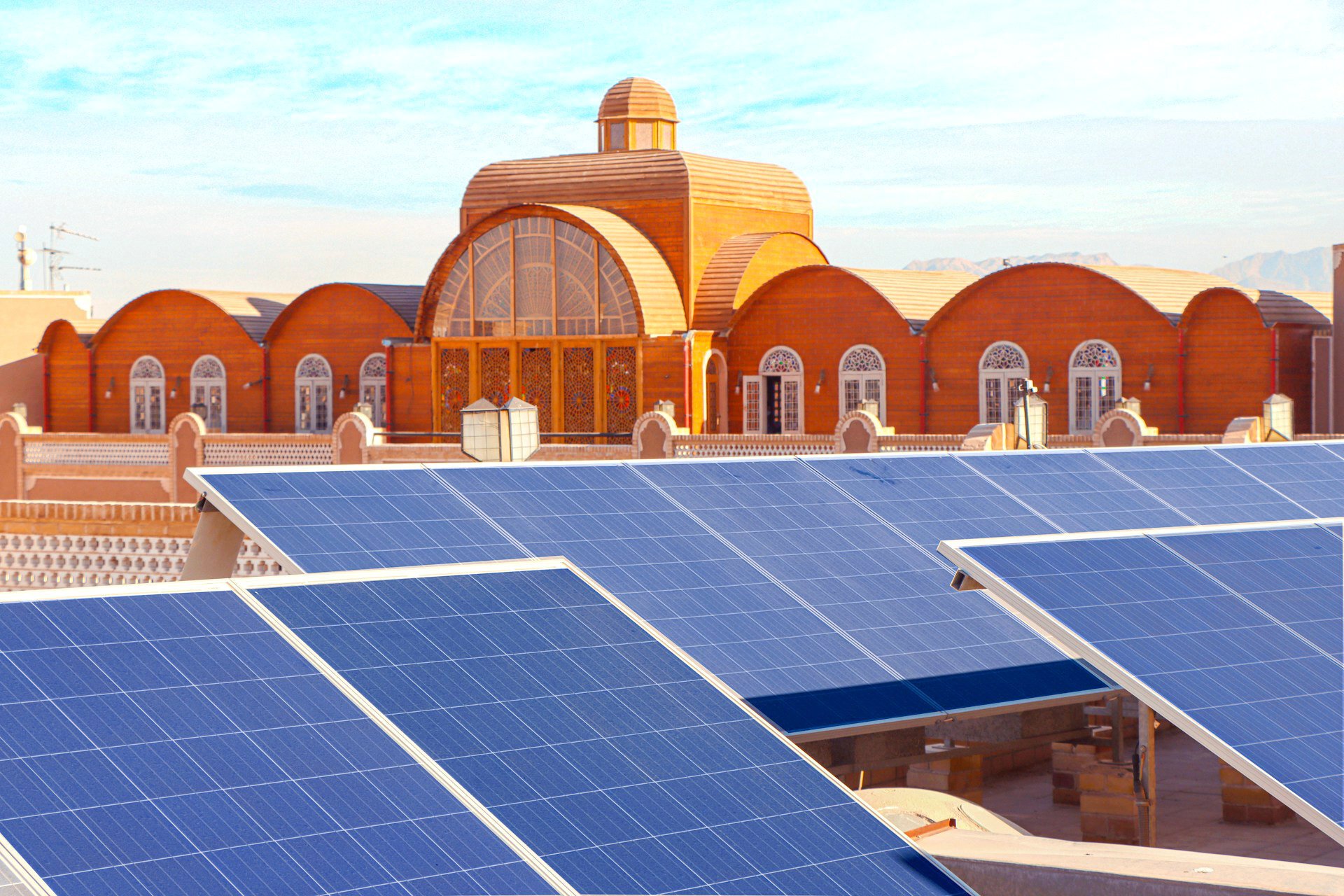
Carbon neutrality has emerged as perhaps the defining environmental challenge for the hospitality industry, with decarbonization targets sitting at the forefront of many companies' ESG goals.
Numerous hotel brands, including Accor, Hilton and IHG, have committed to at least halving their carbon footprint over the next decade, a significant undertaking given the energy demands of running hotels at scale, around the clock, across the globe.
Yet carbon is only part of the picture. The transient nature of hospitality makes the industry especially prone to waste in ways that are easy to overlook. It is not “just one towel”, or “just one straw”, at the scale at which this industry operates, these choices compound rapidly.
The responsibility falls on providers not only to make “choosing green” convenient for guests, but to make it the default. The familiar “do not disturb” sign is a small but telling example: why is daily housekeeping the norm that guests must opt out of, rather than a service they actively request?
None of this can be achieved in isolation. Environmental sustainability is a collective effort, which is particularly challenging in a fragmented industry like hospitality, where ownership, operation and branding are often split across multiple parties.
The establishment of targeted alliances such as the Energy & Environment Alliance (EEA) and the Sustainable Hospitality Alliance (SHA) has been a crucial step towards consolidating best practices and shared resources, and such organizations will be key in driving the joint push for a sustainable future.
Social
As social awareness has grown, so too has the pressure on hospitality companies to reflect that awareness internally. Diversity and inclusion initiatives are increasingly being brought to the fore, not only in terms of “observable” characteristics such as gender and race, but also “invisible” factors including intellectual capabilities and mental health concerns.
In a global industry that draws its workforce from virtually every corner of the world, getting this right is both a moral imperative and a competitive one. That starts with the basics. Traditionally, the hospitality sector has been notorious for fostering a “long-hours, low-wage” work environment.

While perceptions and conditions are arguably changing, the sheer scale of the industry only further emphasizes how important it is that we care for the people who care for our customers. Beyond pay and hours, this extends to the physical and psychological environment in which people work.
In a people business, human health and safety are of utmost importance, and achieving this can be as straightforward as consciously choosing natural rather than chemical-based materials and products, to the benefit of guests and employees alike.
The stakes are especially high at the lower end of the labor market. Low-skilled workers, who comprise a high proportion of this industry's workforce, are especially vulnerable to lapses in human rights protections.
Meanwhile, 1 in 5 youths are at risk of poverty or exploitation due to a lack of access to education or employment. Human rights groups and youth employment programs such as those organized by the SHA are therefore ever-more important in building a future for this industry that is not only sustainable, but equitable.
Governance
Of the three ESG pillars, governance is perhaps the most foundational. Company ethics underpin everything: they shape how a business treats its employees, engages with its communities, manages its environmental impact, and responds when things go wrong.
Get governance right, and the other pillars become easier to build. Get it wrong, and no amount of solar panels or D&I initiatives will compensate.
The rise of ethical consumerism has sharpened this accountability considerably. The era of “voting with one's wallet” means that consumers increasingly seek to purchase from brands whose values are aligned with theirs, making a company's ability to demonstrate genuine adherence to ethical practices more important than ever before.
In hospitality, where the guest relationship is personal and the brand promise is experiential, that transparency carries particular weight.
Governance also has a distinctly local dimension. As consumers continue their quest for authentic, off-the-beaten-track adventures, hotel companies are expanding into more local and unconventional destinations, trying to provide highly localized experiences.
In this context, local knowledge and effective communication are essential in ensuring that such ventures find the right balance between adhering to global brand standards and genuinely respecting local customs, regulations and communities.
Governance frameworks that account for this complexity, rather than applying a one-size-fits-all approach, will be the ones that endure.
ESG Across Hotel Asset Lifecycles
The ESG factor has often been associated with the notion of premiums: implementing ESG is typically perceived to require higher upfront costs, while investors expect to command a premium price upon sale for ESG-compliant assets. But is this a reality, or simply a myth?
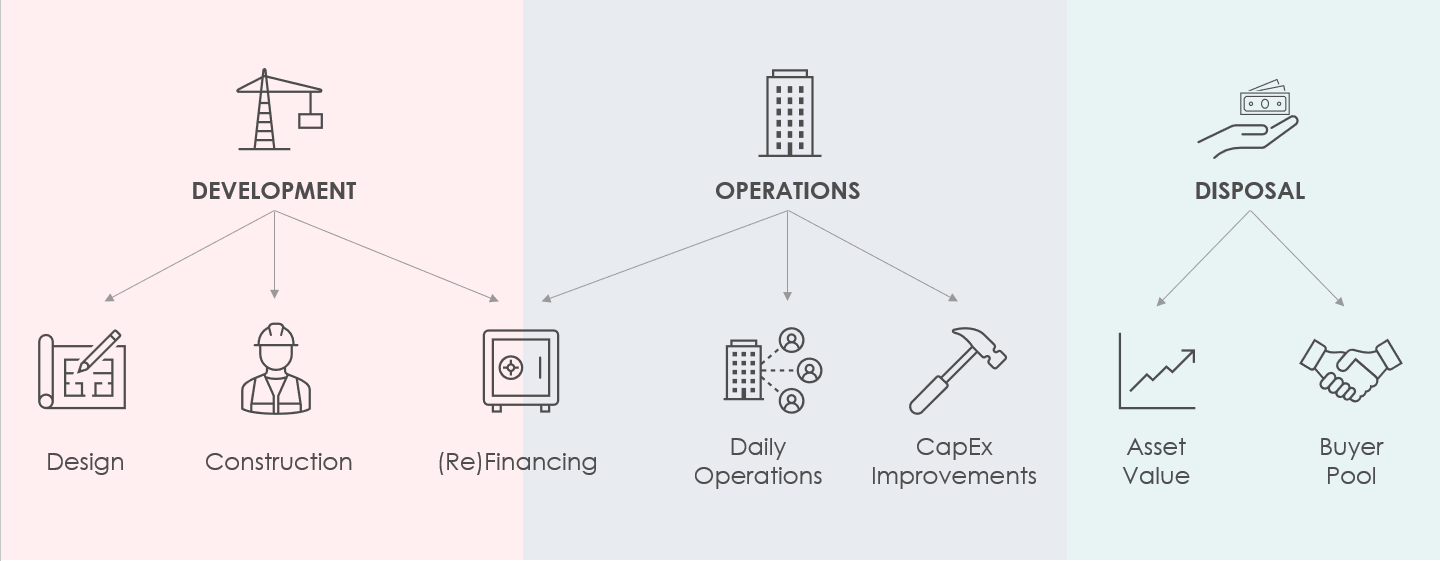
What is less frequently discussed is how ESG considerations shift and evolve across the different stages of a hotel's life.
A developer breaking ground faces entirely different ESG decisions to an operator managing daily energy consumption, or an owner preparing an asset for sale. Meanwhile, investors may enter the picture at any point along that journey, each with their own ESG lens and obligations.
Understanding ESG in hotel real estate therefore requires a stage-by-stage approach. Below, we examine key phases of the hotel asset life cycle, exploring both the practical ESG considerations at each stage and the extent to which the much-debated “ESG premium” holds up to scrutiny.
Development
For developers, owners and investors, the development stage is where ESG credentials are established (or compromised). It is also where the gap between intention and execution tends to be widest.
Cost pressures, tight timelines, and fragmented decision-making can push sustainability considerations down the priority list. Understanding where ESG fits at each step of development is the first move toward closing that gap.
Design
With implementing ESG initiatives, unsurprisingly, the mantra is, “the earlier the better”. Developers and investors should maximize their ESG efforts as early as possible in the development stage, to reap the optimum benefits in the long-term.
This starts from the building’s design. Some important ways in which ESG factors may be incorporated into the design phase include:
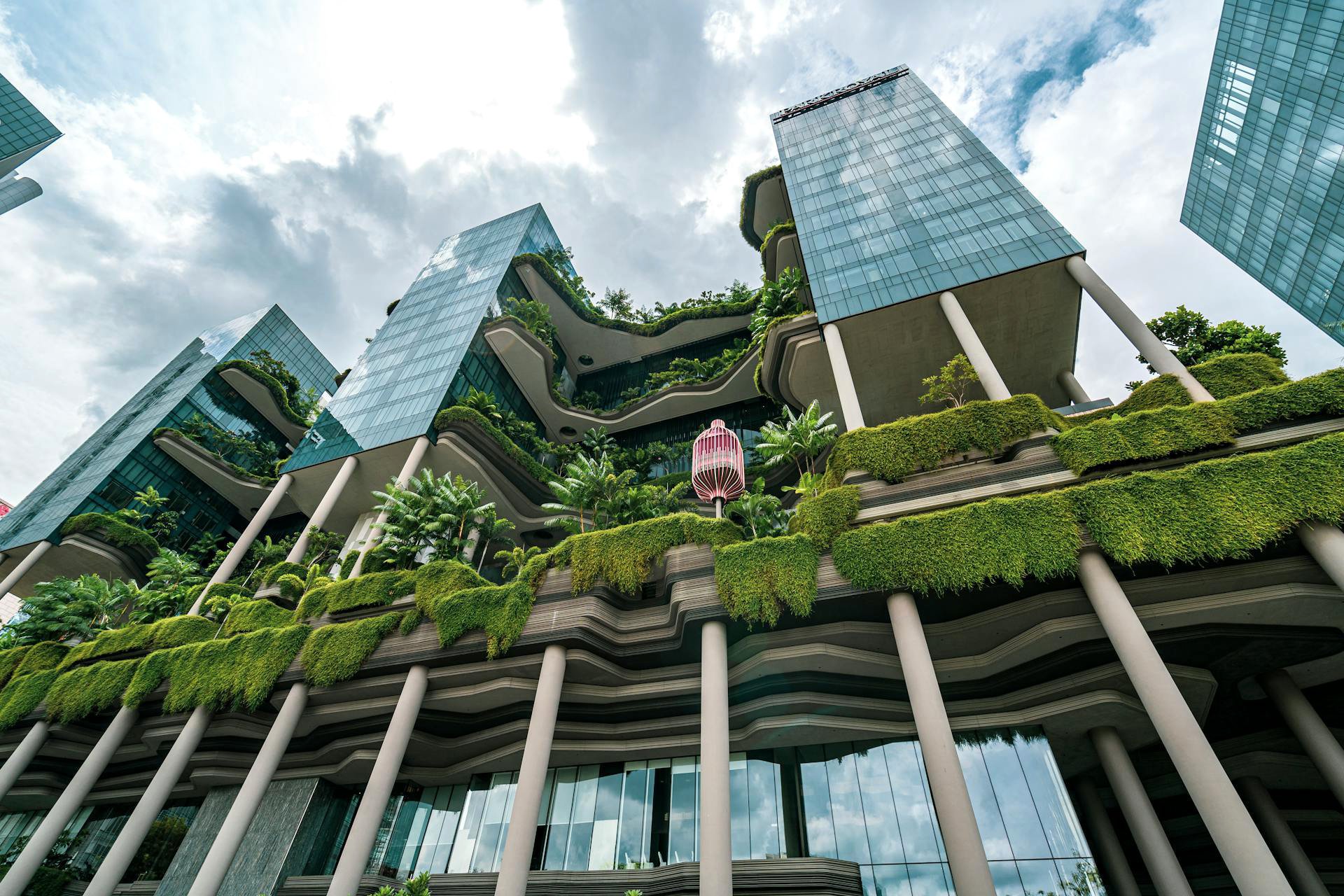
- Sustainable buildings: Sustainable buildings have been found to be at least 20% more resource-efficient, while still providing a unique guest experience. For example, the multi-award-winning PARKROYAL COLLECTION Pickering, Singapore boasts 15,000 sqm of green and water features, natural light and ventilation and zero-energy sky gardens; while the QO Amsterdam, which was designed based on the principle of “circularity”, features its very own greenhouse, energy storage system, and responsive thermal panels.
- Passive houses: Passive design is a design process that creates ultra-low energy buildings that require minimal heating and cooling systems, thus significantly reducing energy and water usage. Originating from the German residential market, the concept has since expanded to offices, schools, retail buildings – and hotels (see example: Bruck Passive House Hotel).
- Adaptive re-use: The principle of circularity also applies to real estate. Buildings should be designed with the mentality that it may one day be adapted for alternative uses (e.g. a hotel may be converted into an office building in the future). This would help to minimize the cost and use of resources to carry out such conversions.
Construction
 Alila Jabal Akhdar, Oman. Source: Remote Lands
Following the design phase, sustainable construction is also an important aspect of ESG, especially as the hotel industry continues to expand its global footprint. Despite hotel supply continuing to grow globally across every major market, resources are still finite. In the construction phase, major considerations include:
- Sourcing sustainably: Sourcing sustainable construction materials is key in ensuring that we build safely and within our means. For example, the Forest Stewardship Council (FSC) in the U.S. provides certification for products that come from responsibly managed forests, while Green Seal-certified products such as paints and sealers have been verified to be safer for human health and the environment.
- Sourcing/building locally: Perched 2,000-meters above sea-level, the Alila Jabal Akhdar in Oman is a prime example of how a hotel can be integrated into the local environment. Using traditional Omani construction techniques and local stones, the hotel was intentionally built to blend into the destination’s natural landscape, whilst offering an exquisite guest experience.
- The "Green Premium" myth: Contrary to popular belief, developing a LEED-certified, ‘green’ hotel may not be as costly as one may think. In fact, the United States Green Building Council (USGBC) reported that the cost of constructing a green hotel is at best 1 to 2% higher than building a conventional hotel.
(Re)Financing
Whether owners or investors are looking to finance new developments or refinance existing loans, they have one aim: to secure sufficient leverage on the most favorable terms.
To that end, the rise of ESG-linked loans reached USD 1.74 trillion in total issuance in 2024, which is a 12% increase compared to $1.54 trillion in 2023, reflecting a shift in available capital towards ESG-oriented investments that is now well-established and still growing.
For hotel owners and developers, this has two implications:
- A larger pool of capital: The EUR 1 trillion European Green Deal Investment Plan (EGDIP) is just one example of how sustainability-focused investors will be able to capitalize on more opportunities to finance their ESG-compliant projects. Meanwhile, banks too are seeing the benefit of having strong ESG portfolios, as they present a significantly lower cost of risk.
- Restricted access to financing: On the other side of the coin, this growing trend towards ESG investing, supported by the widening network of the United Nations Principles for Responsible Investment (UNPRI), is a telling sign that investors who do not jump onto the ESG bandwagon may soon find themselves penalized with a smaller pool of capital and less financing opportunities.
Operations
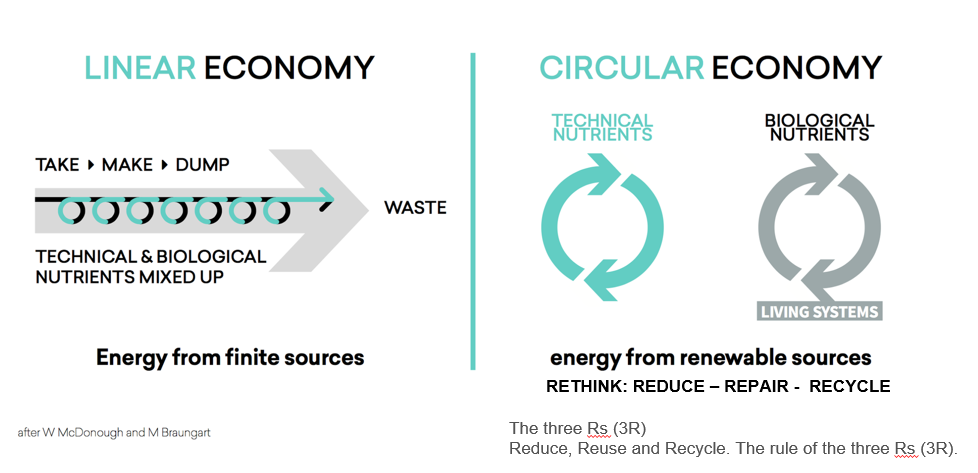 Linear versus Circular Economy. Source: EU Sustainability Guide
The bulk of a hotel’s life cycle, both in terms of duration and resource usage, lies in this domain. Therefore, it is crucial for hotel operators (and owners) to be prudent in ensuring that their operations comply with ESG standards. Here, the main considerations include:
- Tracking and management systems: It is often said that “what gets measured gets managed”. Hotel brands have been building proprietary systems to track and measure their environmental performance, in order to better manage their progress. Examples include IHG’s Green Engage and Hilton’s LightStay.
- Sourcing sustainably/locally: Each year, billions of dollars are spent in purchasing hotel furniture, fixtures and equipment (FF&E) alone. Sustainable procurement and purchasing of FF&E, operating supplies and equipment (OS&E) and F&B products are consequently crucial in this aspect.
- Towards a circular economy: In addition to sustainable sourcing, materials and products should be used in a circular rather than linear economy, whereby products are created such that they can be disassembled and broken down by nature (biological material) or reused (technical material). This way, these materials can belong to a continuous cycle of being reused and repurposed, following the cradle-to-cradle (C2C) principle, rather than the traditional “take-make-dump” lifecycle.
CapEx Improvements
Beyond day-to-day operations, planned capital expenditure cycles offer some of the most impactful opportunities to advance a hotel's ESG profile. Unlike incremental operational changes, CapEx investments can deliver step-change improvements to a building's efficiency, guest experience and asset value in one go.
- Big steps, big rewards: Depending on the hotel’s needs, capital improvement plans can range anywhere from simply retrofitting occupancy sensors for thermostats in guestrooms, to installing a full suite of solar panels. In 2018, Courtyard by Marriott Lancaster became the first U.S. Marriott hotel to be 100% solar-powered, producing an excess of 1.2 million kWh of electrical power each year.
- The "High Investment, Long Payback" myth: A USGBC study found that sustainable buildings recorded an average 19.2% improvement in ROI after implementing sustainable projects for existing buildings, while new buildings reported a 9.9% higher ROI. In emerging markets, the payoff is even more evident: IFC's 2023 report, Building Green: Sustainable Construction in Emerging Markets, found that energy efficiency projects in such markets had payback periods as low as 0.3 to 1.1 years.
- Continuous benchmarking and improvement: It is certainly important to measure the outcomes of capital investments and identify in advance further areas for improvement. Tools like the BREEAM In-Use assessment method and industry-specific benchmarking tools (e.g. from EEA) are just some examples of how this can be achieved.
Disposal

The disposal stage is where the cumulative ESG decisions made throughout a hotel's life cycle are ultimately priced by the market. An asset that has been developed sustainably and maintained to a high ESG standard will tell a compelling story to prospective buyers.
Conversely, assets that have lagged on ESG are beginning to face a reckoning, as the pool of buyers willing or able to acquire non-compliant properties narrows. The dynamics at play during disposal can be understood through two lenses: asset value and buyer pool.
Asset Value
The value of a hotel asset is directly linked to its operational cash flows. ESG-compliant assets will not only generate higher cash flows for investors/owners during the holding period, but also create a higher exit value. This may be achieved through one or both ways:
- Healthier top line performance: Recent surveys consistently show strong traveller interest in sustainability though willingness to pay a premium varies widely by market, from around 43% in Booking.com's global research to upwards of 80% in Euromonitor's analysis.
- Improved bottom line margins: Higher compliance to ESG standards means greater building efficiency and lower operational costs. Or from a social perspective, happier employees, higher employee retention and hence lower rehiring and retraining costs. This translates to higher profit margins and consequently, increases the asset’s long-term value.
Buyer Pool
Similar to the scenarios that investors may face with (re)financing, ESG-compliant assets may initially attract a larger buyer pool, leading to the desired “green premium” for sellers. However, rising regulations and growing social awareness indicate that investors are increasingly interested in “buying green”.
This means that investors who hold assets that do not fulfill ESG criteria may find themselves increasingly faced with narrower buyer pools and even pricing discounts, such that eventually, we may be speaking more of “brown discounts” than green premiums for assets that do not meet ESG standards.
In Summary

There is no question that along with the continued rapid growth of our industry comes a mounting responsibility to ensure that this growth is sustainable. Fortunately for us, it is evident that adhering to ESG goals and standards is not only socially responsible, but also financially necessary.
The opinions expressed in this article are those of the author/s and may differ from the opinions of Invesco Real Estate and other Invesco investment professionals, or Cushman & Wakefield and other Cushman & Wakefield professionals respectively.