Yachts are among the most extravagant assets a person can own. They require a full-time crew, constant upkeep, and specialized infrastructure costing millions each year just to maintain.
For those who buy them, that level of expense isn’t a drawback. It’s part of what makes ownership so exclusive. These vessels are private, custom-built spaces designed for long-distance travel in total comfort and control.
Pricing reflects far more than size. The most valuable yachts are shaped by complex design work, rare materials, advanced technology, and amenities tailored to the owner’s lifestyle. Naval architects, interior designers, and shipbuilders spend years bringing each one to life.
From helipads and cinema rooms to secure communications and custom artworks, every detail is deliberate. In this article, we look at some of the most expensive yachts ever built, what sets them apart, and the controversies that surround them.
Superyacht Market Overview
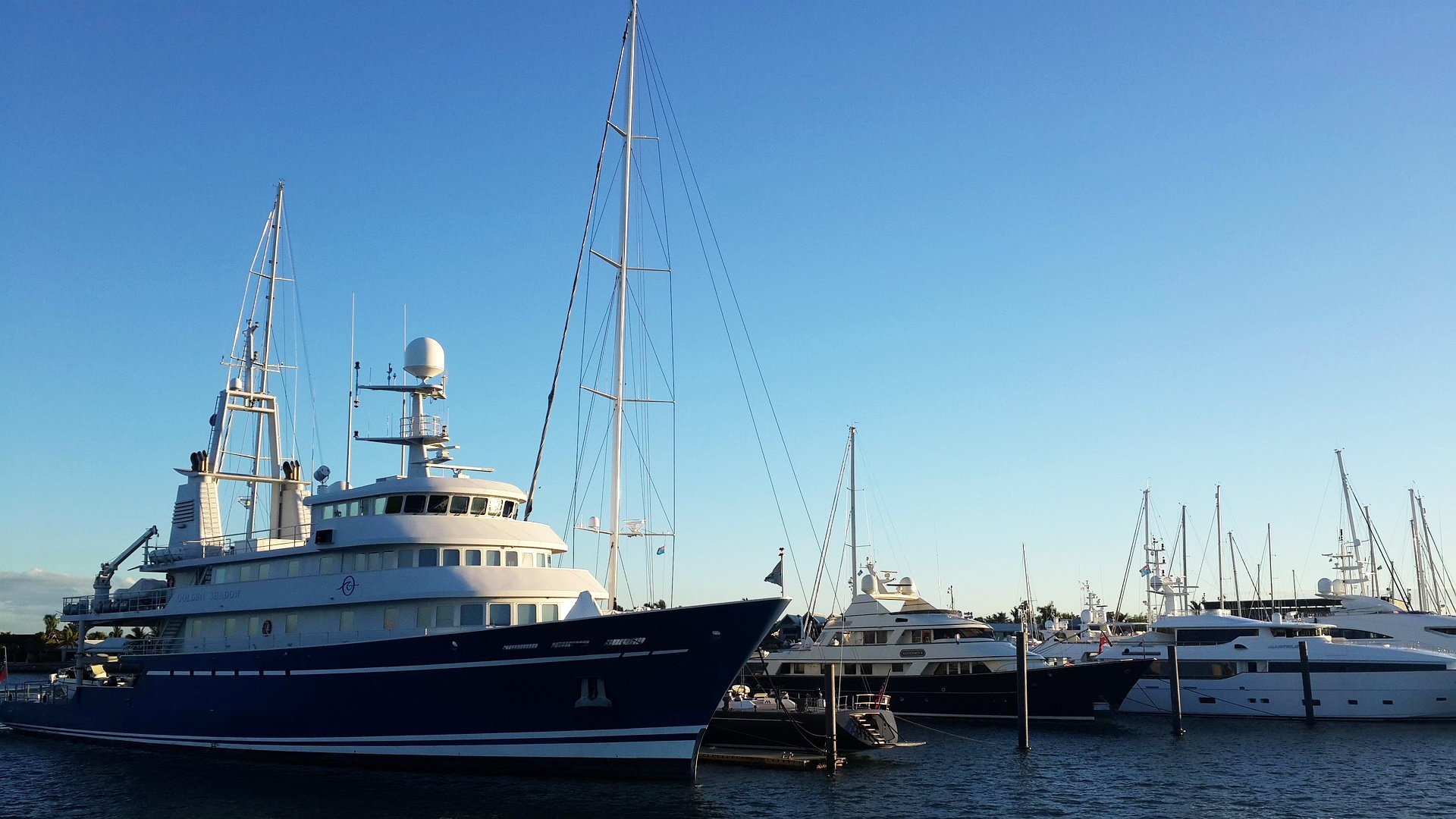
Few markets are as large and as poorly understood as superyachts. It has no flagship stores, no public price lists, and no transparency obligations.
Yet it generates billions annually, supports entire port economies, and has proven stubbornly resistant to financial downturns that flatten other high-end sectors. Valued at billions annually, the industry operates almost entirely out of public sight, built on private commissions, shell company ownership, and transactions that rarely surface in any registry.
Before looking at the most expensive yachts ever built, it's worth understanding the market that makes them possible: who builds them, who buys them, and what they actually cost to own.
Market Size
The superyacht market is worth billions annually, though estimates vary widely depending on how vessels are classified. It is broadly valued in the tens of billions and projected to nearly double over the coming decade, driven by a sustained rise in ultra-high-net-worth individuals and an appetite for bespoke maritime assets that shows little sign of slowing.
The buyer profile has shifted significantly. Gulf royalty and European aristocracy once dominated ownership, but the market now draws heavily from tech wealth, energy money, and new-generation billionaires.
Your average superyacht owner's age has dropped by approximately ten years over the past two decades Lumenautica, with younger buyers prioritising experience and personalisation over tradition.
Geography is shifting too. Emerging markets in Asia-Pacific, particularly China and Southeast Asia, are witnessing a surge in superyacht ownership driven by growing affluence Reanin, while North America already accounts for the largest regional share of the market Global Market Insights.
What was once a predominantly European pursuit has become genuinely global.
So has the definition of the asset itself. A superyacht was once broadly understood as any vessel exceeding 24 metres, but that threshold has become almost meaningless at the top end.
Shipbuilders
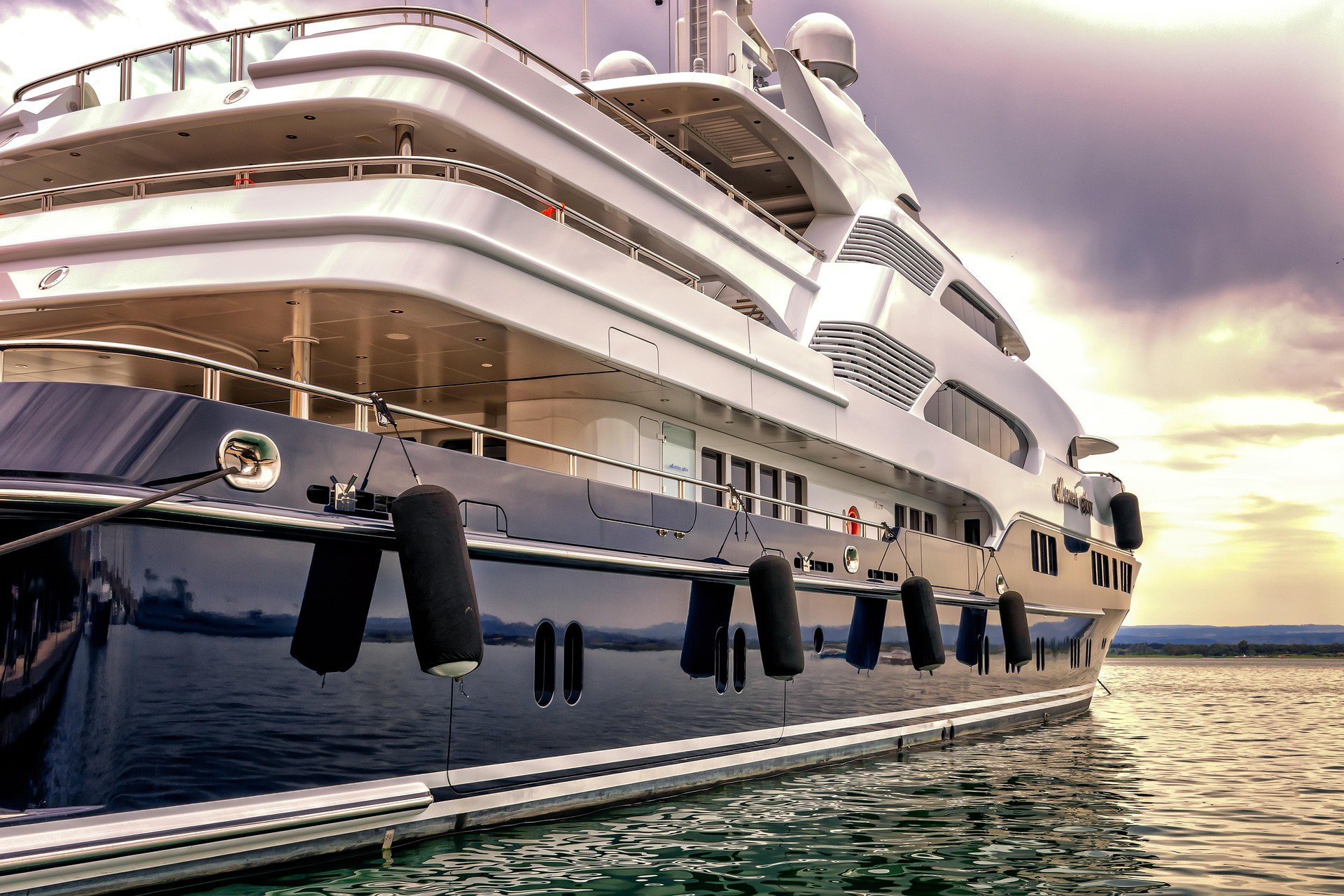
Three yards build the majority of the world's most expensive yachts. Lürssen in Germany, Oceanco in the Netherlands, and Fincantieri in Italy have collectively delivered more vessels on this list than any other builders.
Their dominance isn't accidental. Each has decades of experience handling projects of extraordinary complexity, the engineering infrastructure to match, and a reputation for discretion that clients at this level require above all else.
Building a yacht of this scale takes time. From the moment a commission is signed to the day a vessel is delivered, three to five years is standard. That window accounts for design, engineering, sourcing rare materials, and the kind of iterative refinement that comes with building something entirely unique.
The builder is only one part of the equation. Naval architects handle the hull design and performance engineering, while interior designers work largely independently to shape everything the owner actually lives in.
These are separate disciplines, often involving separate firms, which is why a single yacht can carry three or four different names in its credits.
Beyond the dominant trio, a handful of specialist yards operate at the same level. Feadship, also Dutch, is particularly respected for engineering precision. Benetti in Italy and Heesen in the Netherlands both have long track records with serious commissions.
Secrecy runs through every stage of the process. Clients sign NDAs before discussions begin. Yard access is tightly controlled. Ownership is frequently routed through shell companies so that even the vessel's registration reveals little about who is actually paying for it.
Cost of Ownership
The purchase price of a superyacht is really just the entry fee. A widely cited rule of thumb in the industry holds that owners should expect to spend roughly ten percent of a vessel's value every year just to keep it operational. On a $500 million yacht, that's $50 million annually before the owner has left the dock.
Crew is the biggest single line item. A large vessel requires a full-time team of anywhere from 60 to 170 people depending on size. Captains at this level command salaries well into six figures. Senior officers, engineers, and specialist staff add up quickly, and that's before accounting for accommodation, food, and benefits for everyone on board.
Fuel adds another significant layer. Large motor yachts burn hundreds of litres per hour at cruising speed. A long transatlantic passage can cost hundreds of thousands in fuel alone. It's one reason sailing yachts like Koru attract attention beyond aesthetics: the operating economics are genuinely different.
Then there are the less visible costs. Insurance on a vessel worth half a billion dollars is substantial. Classification societies charge fees to certify that a yacht meets safety and structural standards, and those certifications require regular surveys.
Flag state registration adds further administrative and financial obligations depending on where the vessel is registered.
Every five to ten years, a yacht needs a full refit. Hull work, mechanical overhauls, interior updates, and compliance upgrades can run into the tens of millions… The “Dilbar” yacht was literally mid-refit in Hamburg when German authorities seized it in 2022, imagine the cost drain.
Berthing in the places these yachts tend to visit isn't cheap either. Monaco, Cannes, Mykonos, and the Maldives all command premium marina fees, sometimes tens of thousands per night for the largest vessels.
Some owners offset these costs through chartering. Putting a yacht on the charter market at $500,000 to $1 million per week can recover a meaningful portion of running costs. Not all owners are willing to do it because privacy and wear are genuine concerns, but for those who are, it changes the financial calculus considerably.
Transfer of Ownership
At this level, yachts rarely come to market in any conventional sense. There are no listings, no public auctions, and no transparent price guides.
When one of these vessels does change hands, it typically happens quietly, brokered by a small number of specialist firms like Burgess, Fraser, and Camper & Nicholsons among the most prominent, who operate almost entirely on relationships and discretion.
The sales that do happen are usually triggered by something specific. An estate transfer, a divorce settlement, a financial reversal, or in some cases pure impulse: Mohammed bin Salman's reported same-day purchase of Serene being the most cited example. Planned, strategic resales are the exception.
Valuation is genuinely difficult. These are custom-built assets with no direct comparable. Depreciation curves are unpredictable, and what an owner spent building a yacht rarely reflects what the market will pay to take it on with its existing layout and specifications.
The sanctions fallout has compounded this. Several high-value yachts are currently frozen in European ports with no clear legal pathway to sale or return. They sit in a category of their own: too valuable to abandon, too politically complicated to move. The distressed asset problem they represent has no obvious resolution in sight.
Geopolitics and Sanctions
No single event has reshaped the superyacht market more abruptly than the sanctions imposed on Russian oligarchs following the invasion of Ukraine in February 2022. Within days, European ports became holding grounds.
Vessels were frozen in place across Spain, Germany, Italy, and Gibraltar; some mid-refit, some freshly arrived. The legal complexity was immediate and considerable, involving multiple jurisdictions, contested ownership structures, and questions about whether the named owner was the real one.
Dilbar remains the most high-profile case. Seized in Hamburg while undergoing a refit, it has sat in legal limbo ever since… Valued at hundreds of millions, maintained at ongoing cost, and with no clear pathway to either confiscation or release.
The weeks before the freezes saw a scramble. Yachts were hastily re-registered under different flags. Ownership was restructured through trusts and nominee arrangements in an attempt to create distance between the vessel and its sanctioned beneficial owner. Some succeeded. Many didn't.
The longer-term impact on buyer confidence has been real. Wealthy buyers outside the sanctioned circle watched how quickly an asset of this scale could be rendered untouchable.
It accelerated an already growing trend toward more layered, legally insulated ownership structures, which has essentially redefined how the most expensive yachts in the world are actually owned.
7 Most Expensive Yachts
These are the vessels that redefine what money can build. Each one is the result of years of planning, design, and construction, often involving the most respected shipbuilders and designers in the world.
Their exteriors turn heads in every marina, but it's what lies inside that sets them apart. The yachts on this list aren’t available for charter, and they rarely appear in public beyond a quick glimpse from a drone or paparazzi shot.
Built for heads of state, royalty, and billionaires, these floating giants are more than transportation. They’re fortified sanctuaries, mobile estates, and in many cases, private offices at sea. Below, we look at the most expensive yachts ever built.
Azzam
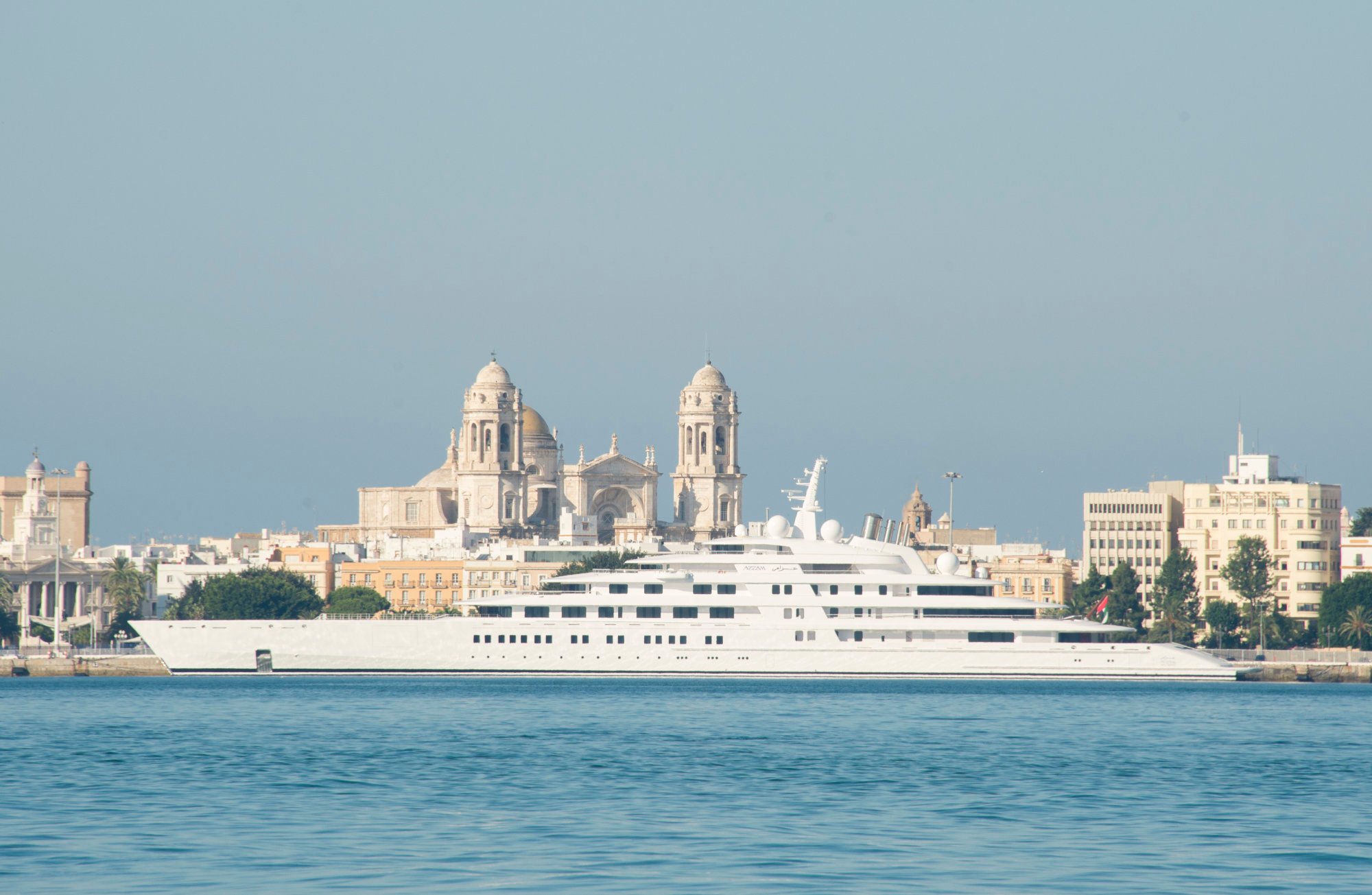
Azzam superyacht by Javier Virués Ortega, CC BY-SA 4.0
Estimated Value: ~$605 million
Owner: Khalifa bin Zayed Al Nahyan (UAE)
Builder: Lürssen Yachts, Germany
Year Delivered: 2013
Length: 180 m
Gross Tonnage: Not widely cited
Top Speed / Cruising Speed: Over 32 knots
Engines & Propulsion: Dual gas turbines + dual diesels with water jets
Exterior Designer: Nauta Yachts
Interior Designer: Christophe Leoni
Guests / Cabins: Guest capacity not disclosed
Crew Capacity: Estimated 60+
Notable Features: Missile defense system, bulletproof suite, column-free salon
Noteworthy Facts: Longest private motor yacht in the world
Azzam remains the pinnacle of luxury maritime achievement, a floating palace whose sleek profile and record-breaking scale turned heads upon its 2013 premiere.
Commissioned by the UAE’s ruling family, the yacht was the result of a four-year collaboration between Lürssen, Nauta Yachts, interior designer Christophe Leoni, and visionary project lead Mubarak Saad al Ahbabi.
Its design brief was precise: build something fast, elegant, and timeless. According to insiders, the original plan aimed for a 145-meter vessel, but as engineering targets evolved, Azzam stretched to 180 meters.
Beyond its engineering feats, Azzam has gathered stories that elevate it beyond size. Its main salon, which is 29 meters long and devoid of supporting pillars, features a chandelier engineered to remain perfectly still even at top speed.
Koru
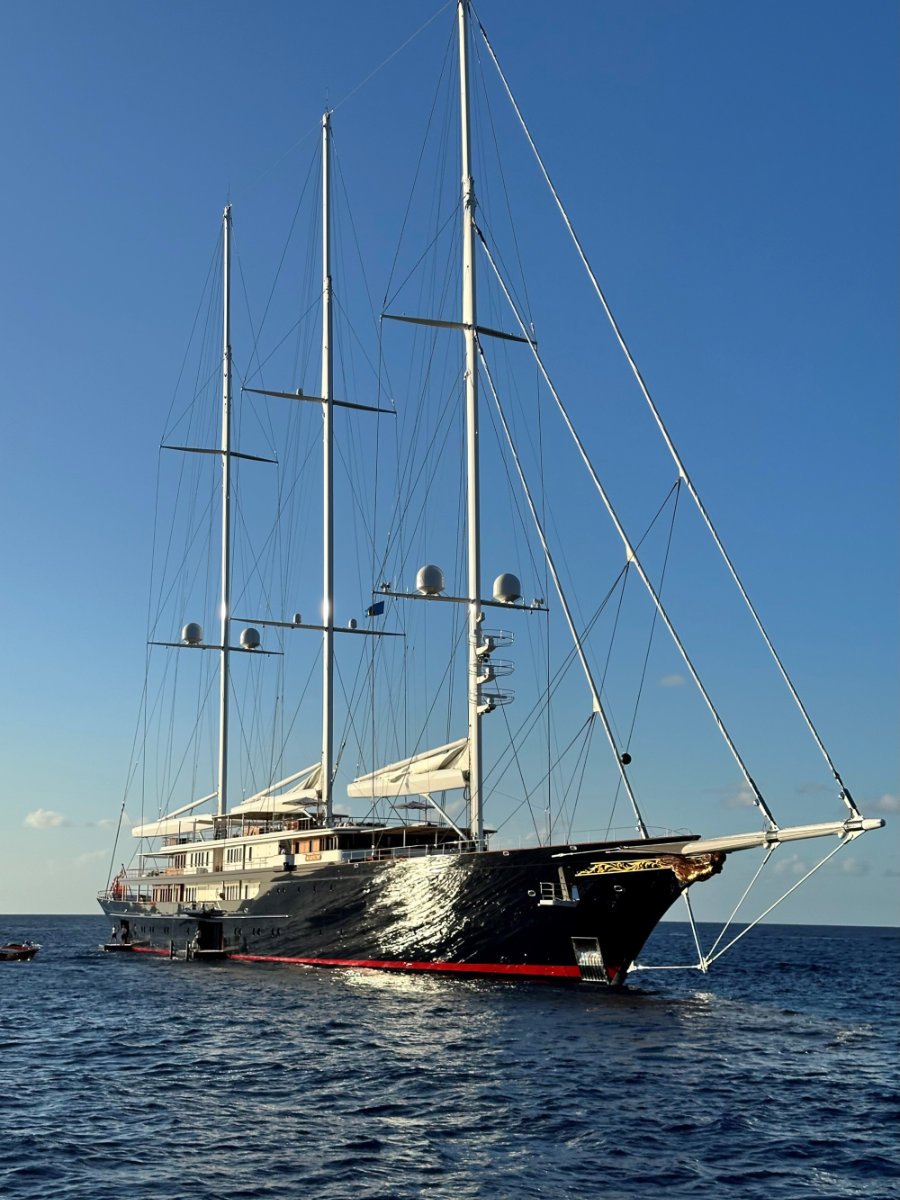
Koru superyacht by Conmat13, CC BY-SA 4.0
Estimated Value: ~$500 million
Owner: Jeff Bezos
Builder: Oceanco, Netherlands
Year Delivered: 2023
Length: 127 m
Gross Tonnage: ~3,300 GT
Top Speed / Cruising Speed: ~20 knots top, ~15 knots cruising
Engines & Propulsion: Sailing yacht with hybrid diesel system
Exterior Designer: Dykstra Naval Architects
Interior Designer: Mlinaric, Henry & Zervudachi
Guests / Cabins: 18 guests in 9 cabins
Crew Capacity: ~36-40
Notable Features: Three masts, pool, cinema, support vessel with helipad
Noteworthy Facts: Used for Bezos's wedding; features eco-friendly sailing design
Commissioned by Jeff Bezos and delivered in April 2023 by Oceanco, Koru quickly gained notoriety not only for its size but for symbolic meaning.
The name itself derives from a Māori word representing renewal and growth, reflecting a new chapter for Bezos with Lauren Sánchez. Adorned with a striking figurehead of Freyja, the Norse goddess of love and fertility, the prow signals both mythic storytelling and personal significance.
The yacht debuted on the social stage during Bezos’s surprise proposal at Cannes in 2023, followed by an engagement celebration hosted aboard decked with celebrities including Oprah, Katy Perry, and Bill Gates.
Beyond symbolism, the stories around Koru read like a saga. Its construction reels in controversy from its Rotterdam origins, where city officials initially considered dismantling a historic bridge to accommodate its towering masts, sparking public backlash before shipping adjustments rendered the plan unnecessary.
The yacht’s role as a stage for opulence reached its peak during the couple’s 2025 Venice wedding festivities, where Koru served as the setting for a foam‑covered pre‑wedding bash, coastline transits between events, and discreet VIP transfers.
With a dedicated support ship, Abeona, supplying helicopter lifts, water toys, and logistics, the yacht reinforced its position as both a vessel and a stage.
Dilbar
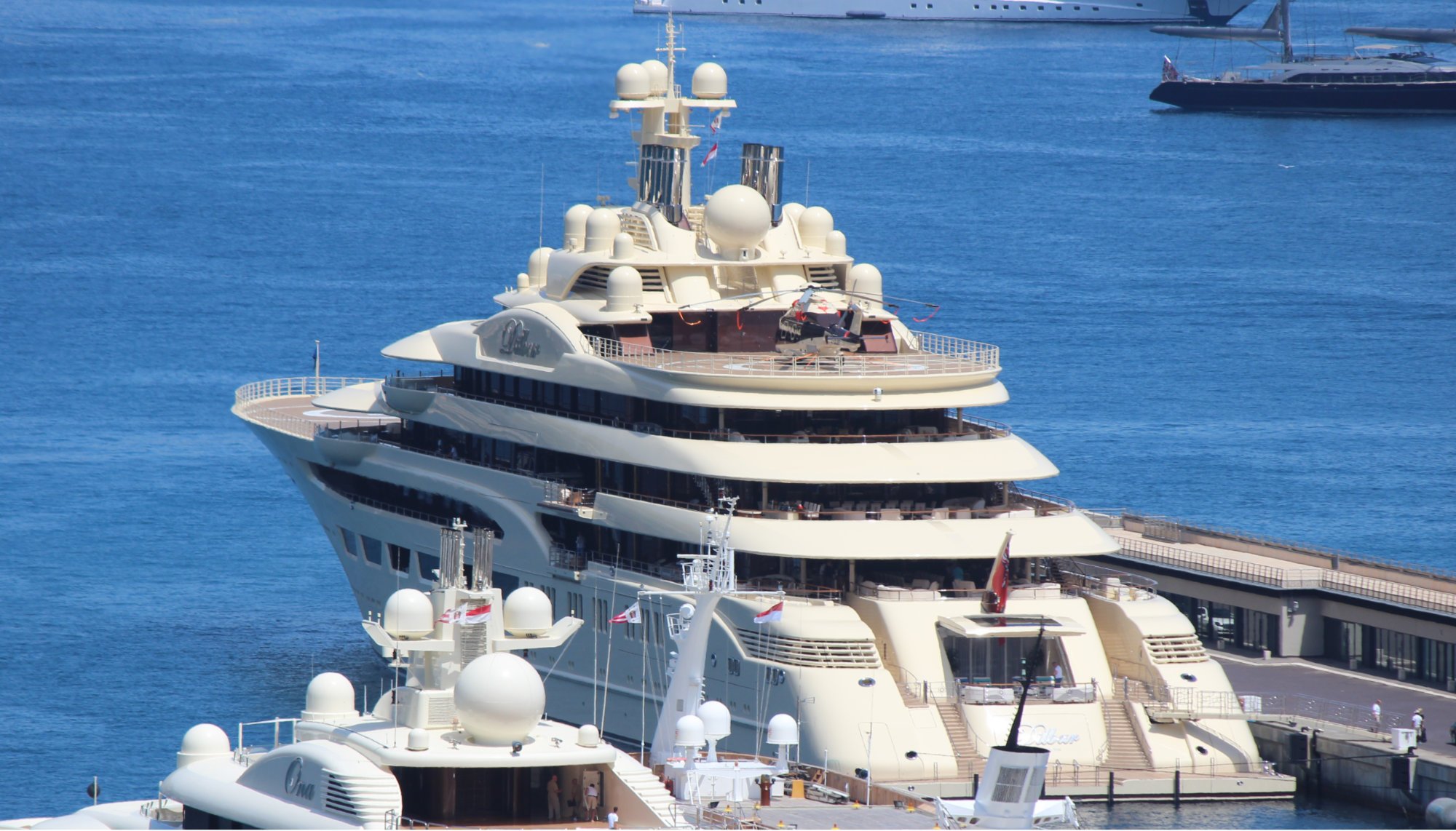
Dilbar yacht in Port Hercules by Uhooep, CC BY-SA 4.0
Estimated Value: ~$600-700 million
Owner: Alisher Usmanov (via trust)
Builder: Lürssen, Germany
Year Delivered: 2016
Length: 156 m
Gross Tonnage: ~15,917 GT
Top Speed / Cruising Speed: ~22.5 knots
Engines & Propulsion: Diesel-electric advanced systems
Exterior Designer: Espen Øino
Interior Designer: Winch Design
Guests / Cabins: Up to 40 guests
Crew Capacity: ~80-84
Notable Features: World’s largest onboard pool, two helipads, spa, gym
Noteworthy Facts: Largest private yacht by gross tonnage at time of launch
Dilbar is frequently described as the queen of superyachts. Its gigantic interior volume and extravagant design affirm its status. Named for the owner’s mother, the 156 m vessel broke records in 2016 as the largest yacht ever built by volume.
The onboard pool, stretching 25 meters and containing some 180 cubic meters of water, earned global headlines as the largest indoor pool ever installed on a private yacht.
Yet it’s more than a feat of scale. Dilbar’s interiors by Winch Design and exterior styling by Espen Øino set a standard of refined luxury rarely equaled. Industry observers called it “one of the most complex and challenging yachts ever built.”
The story took a darker turn with geopolitical drama. In 2022, German authorities seized Dilbar while it was undergoing refurbishment in Hamburg, citing sanctions linked to ties between the nominal owner, Alisher Usmanov’s sister, and the Russian oligarch himself.
The yacht, still valued at hundreds of millions, remains grounded under export control restrictions rather than outright confiscation.
A+ (Formerly Topaz)
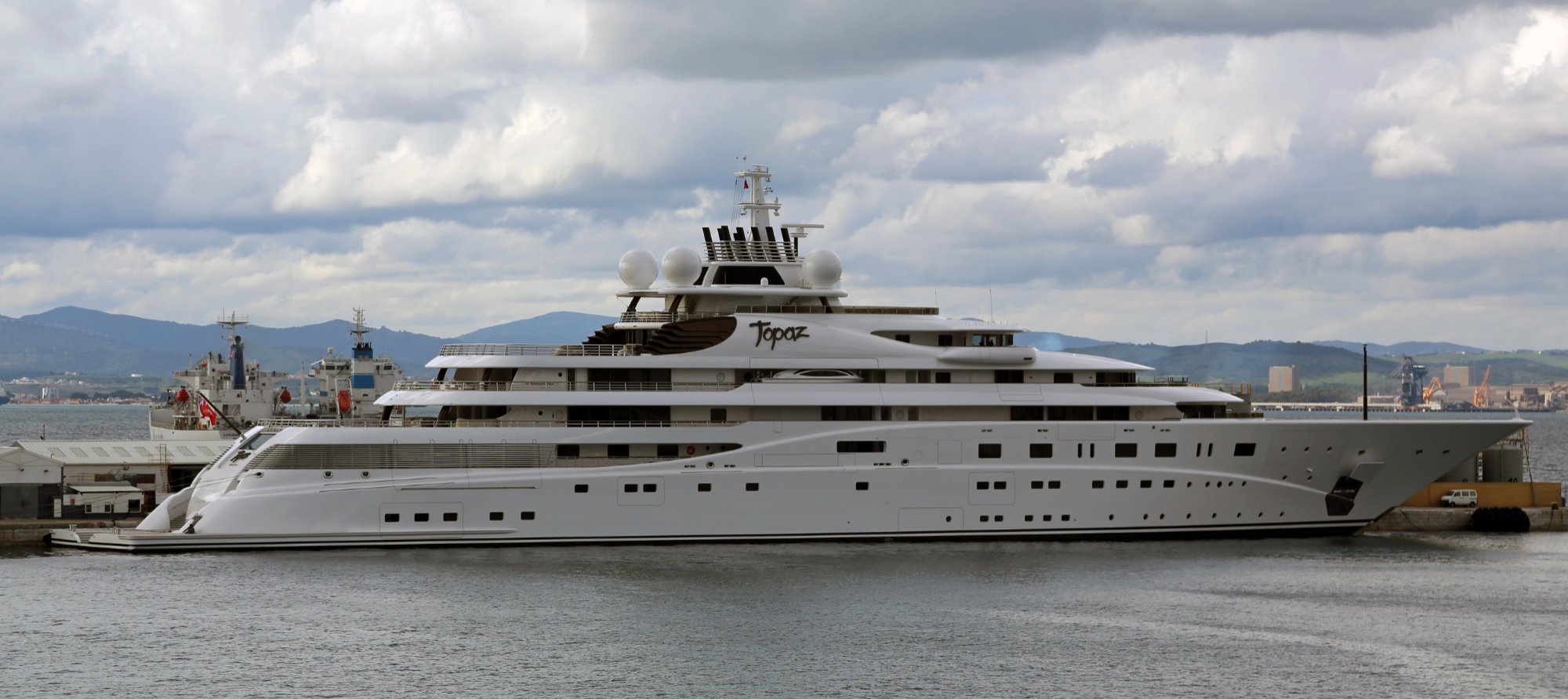
A+ berthed at Port of Gibraltar by Moshi Anahory, CC BY-SA 2.0
Estimated Value: ~$450-500 million
Owner: Sheikh Mansour bin Zayed Al Nahyan
Builder: Lürssen, Germany
Year Delivered: 2012
Length: 147 m
Gross Tonnage: ~12,532 GT
Top Speed / Cruising Speed: ~22.9 knots top, ~12 knots cruising
Engines & Propulsion: Wärtsilä diesel-electric
Exterior Designer: Tim Heywood
Interior Designer: Terence Disdale
Guests / Cabins: 52 guests in 26 staterooms
Crew Capacity: ~79
Notable Features: Two helipads, elevator, gym, cinema
Noteworthy Facts: Formerly named Topaz; renamed A+ in 2019
A+ (initially known as Topaz) quickly became a magnet for celebrity spectacle after its 2012 launch. In 2014, Leonardo DiCaprio leased the yacht for his World Cup holiday in Brazil, hosting an 80s-themed bash onboard attended by Jamie Foxx and Orlando Bloom.
Insiders recounted that every guest signed an NDA before boarding, and the yacht was transformed with live DJs, themed décor, and VIP service. The event cemented Topaz as the ultimate venue for ultra‑private celebrity gatherings.
The yacht’s intrigue deepened when it was renamed A+ in 2019, fueling speculation it had quietly changed hands within elite investor circles, possibly exchanged as part of a high-stakes art portfolio deal.
Despite widespread belief that ownership passed from Sheikh Mansour to Saudi royalty, it was never listed for sale, and the name change was likely a branding move to ensure the yacht consistently appeared at the top of international registries.
Rumors suggest a dramatic sailing accident during the 2020 Superyacht Challenge in Antigua, when Topaz collided with another yacht, Svea.
Dubai
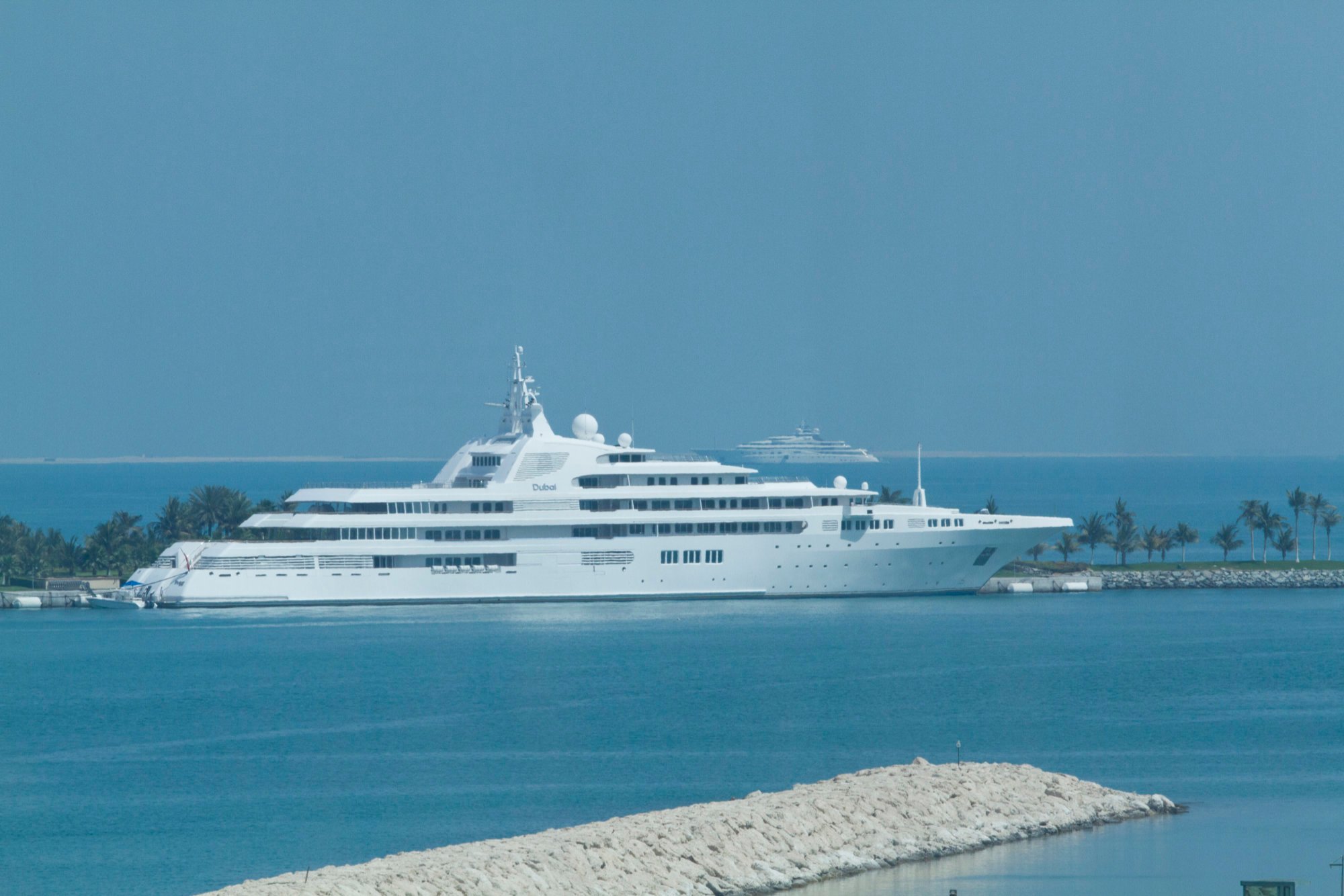
The royal yacht by trolvag, CC BY-SA 3.0
Estimated Value: ~$300-350 million
Owner: Sheikh Mohammed bin Rashid Al Maktoum
Builder: Platinum Yachts (completion)
Year Delivered: 2006
Length: 162 m
Gross Tonnage: Not widely cited
Top Speed / Cruising Speed: ~20 knots
Engines & Propulsion: Diesel engines
Exterior Designer: Tim Heywood
Interior Designer: Platinum Yachts
Guests / Cabins: ~24 guests
Crew Capacity: ~115
Notable Features: Mosaic pool, glass staircase, squash court
Noteworthy Facts: Originally commissioned by Brunei royalty
Originally commissioned by Prince Jefri of Brunei in the late 1990s, the Dubai yacht changed hands mid-construction in 2001 and was completed on behalf of Sheikh Mohammed bin Rashid Al Maktoum in 2006. At its launch, the vessel was the largest yacht in the world and cost approximately $400 million.
Designed by Andrew Winch with interiors by Platinum Yachts, Dubai’s mosaic-lined pool alone reportedly holds over a hundred people. The vessel’s eastern mooring near the ruler’s private island makes it as much a fixture of local prestige as a seafaring showcase.
Dubai’s allure extends beyond design and engineering. Over the years the yacht has hosted discreet gatherings of global elites and served as a backdrop for diplomatic hospitality. It was intended to be a floating palace, complete with a disco, squash court, cinema, and even a submarine garage.
The yacht’s origins add to its mystique; the cancellation of its original Brunei commission only increased its symbolic weight, transforming it into another emblem of shifting power in the Gulf. Despite its size limiting full-scale evangelism, Dubai remains visible from public vantage points.
Serene
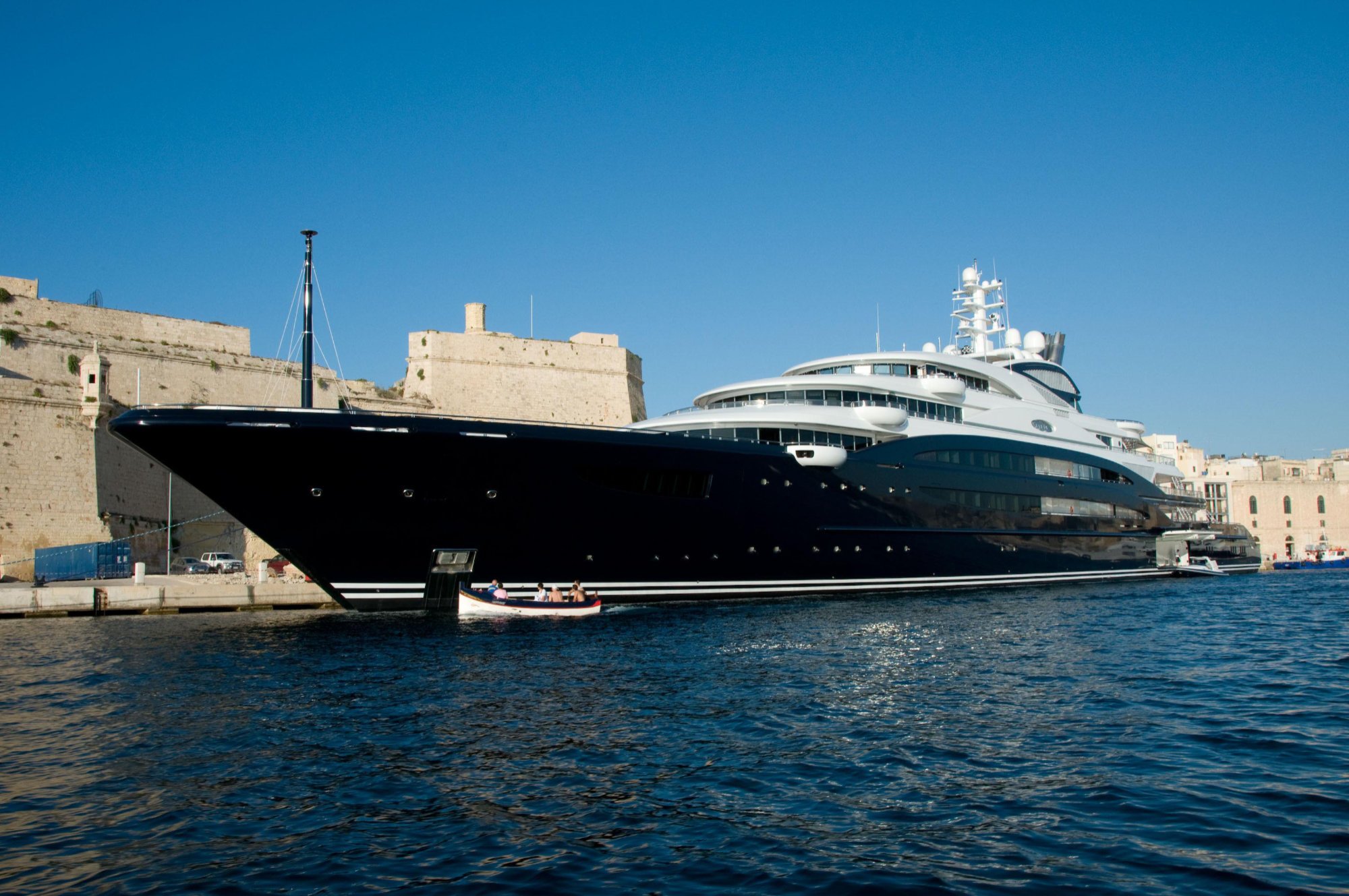
Estimated Value: ~$330 million
Owner: Mohammed bin Salman
Builder: Fincantieri, Italy
Year Delivered: 2011
Length: 134 m
Gross Tonnage: Not widely cited
Top Speed / Cruising Speed: ~20 knots
Engines & Propulsion: Diesel engines
Exterior Designer: Nuvolari Lenard
Interior Designer: Reymond Langton Design
Guests / Cabins: Up to 24 guests
Crew Capacity: ~62
Notable Features: Underwater lounge, spa, beach club
Noteworthy Facts: Sold to Saudi royal family in 2014
Originally owned by Russian vodka magnate Yuri Shefler, Serene changed hands in 2015 when Saudi Crown Prince Mohammed bin Salman reportedly bought her on impulse while vacationing in southern France.
Sources say the purchase was completed within hours, literally a “spot deal”, making headlines around the world.
Among its many extravagant features, Serene includes a pioneering onboard snow room, chilling to -12 °F with real snow falling, a private cinema, seven pools, an underwater-viewing room, a spa, a climbing wall, and outdoor entertainment spaces spanning some 48,000 sq. ft.
In August 2017, Serene ran aground on a coral reef off Sharm El Sheikh in the Red Sea, causing significant damage to her bow. Environmental concerns were raised over coral destruction, and salvage efforts reportedly cost tens of millions, both in repairs and reputational fallout.
The yacht is also said to have hosted Bill Gates in 2014 (who reportedly chartered it for US$5 million per week), and in later years was described as a discreet retreat during times when the Crown Prince needed extra security.
Al Said
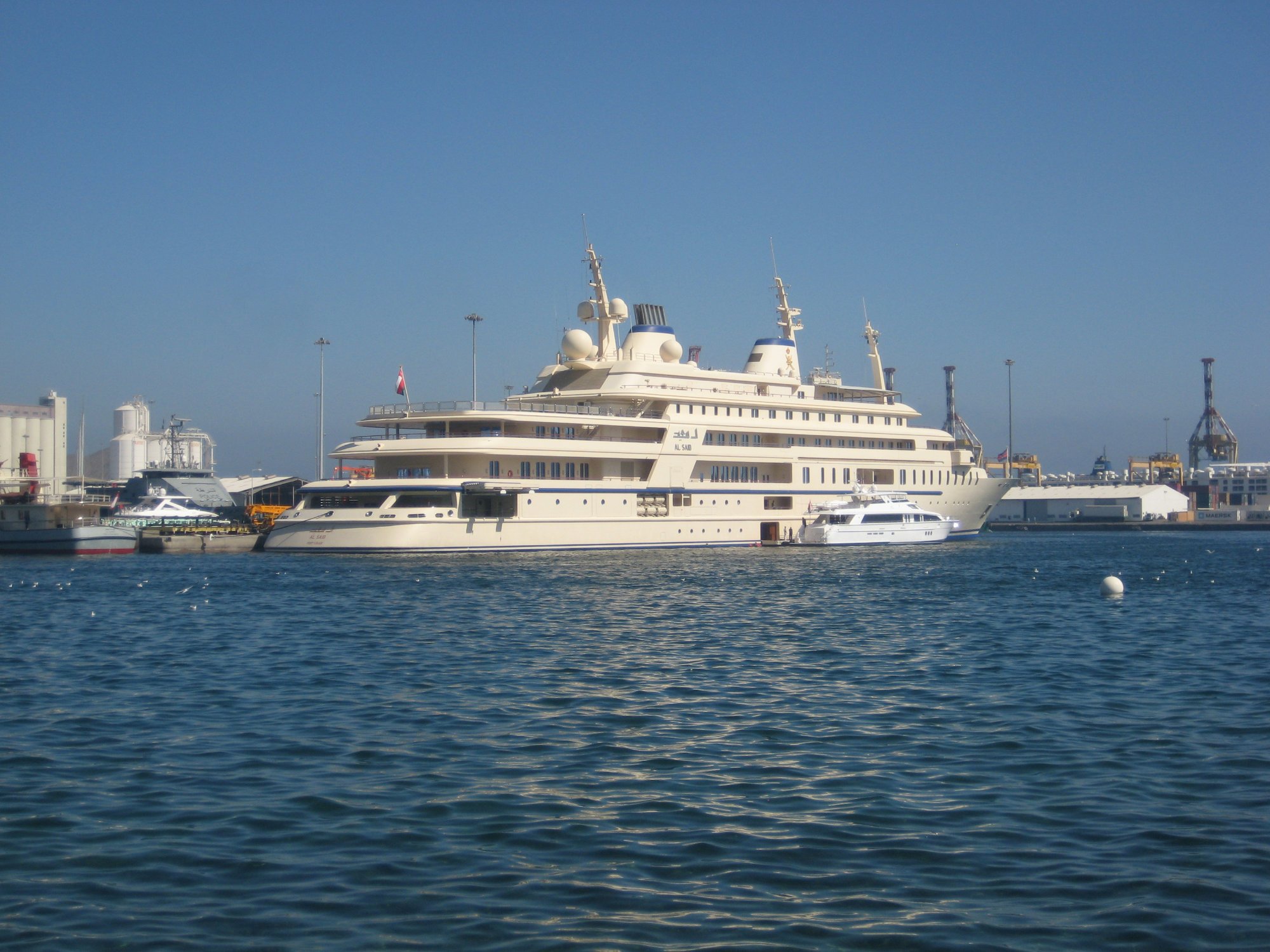
Al Said by Qatarperegrine, CC BY 3.0
Estimated Value: ~$600 million
Owner: Sultan of Oman
Builder: Lürssen, Germany
Year Delivered: 2008
Length: 155 m
Gross Tonnage: 15,850 GT
Top Speed / Cruising Speed: ~22 knots top, ~20 knots cruising
Engines & Propulsion: Twin MTU diesels
Exterior Designer: Espen Øino
Interior Designer: Redman Whiteley Dixon
Guests / Cabins: Up to 70 guests
Crew Capacity: ~174
Notable Features: Concert hall for 50-piece orchestra, cinema, helipad
Noteworthy Facts: One of the largest yachts owned by a head of state
Known during its build as Project Sunflower, Al Said was commissioned by Oman’s Sultan in 2006 and delivered in 2008 by Lürssen.
At launch, it stood as the world’s second-longest yacht: a floating palace designed to reflect sovereign stature. Its onboard concert hall, capable of seating a 50-member orchestra, stands as a testament not just to leisure, but to cultural ambition.
The yacht is part of Oman’s Royal Yacht Squadron and closely guarded; photographs of its interiors are rare, reinforcing the aura of exclusivity and ceremonial prestige.
While Al Said doesn’t regularly grace tabloid headlines, it features prominently in diplomatic symbolism. The yacht serves as Omani royal transport during state visits, hosting foreign dignitaries in motion.
In 2020, the new Sultan of Oman (who succeeded Sultan Qaboos) was photographed boarding Al Said in Muscat, reinforcing continuity of royal tradition.
Speculation has often arisen around attempts to sell it. Online chatter suggests unsuccessful negotiations with other Gulf royal houses, but the yacht remains firmly tied to statecraft rather than personal leisure.
Trends in Ultra-Luxury Yacht Design
As the industry evolves, sustainability has become a major focus in yacht design. Many shipyards now offer hybrid propulsion systems that combine diesel and electric power to reduce emissions and improve fuel efficiency.
Yachts powered by hydrogen fuel cells or solar-assisted batteries are also in development, driven by growing pressure on owners to adopt greener practices.
Materials are shifting too, with lightweight composites and responsibly sourced wood replacing heavier, more resource-intensive options. These changes allow new yachts to meet evolving regulations without compromising on luxury.
Size still matters, but it’s no longer the only goal. Designers are rethinking how space is used, taking cues from luxury hospitality. On the other end of the spectrum, expedition yachts have also grown in popularity for purposes of adventure tourism.
In Summary
For royals and industry leaders, a yacht is often built to outlast trends and serve future generations. It becomes part of a broader legacy, standing in for a family’s reputation or a founder’s vision of what lasting influence should look like.
Docked at Cannes or drifting through the Caribbean, these yachts attract the world’s attention. Even at a distance, they hold a certain fascination, offering a glimpse into a world defined by privacy, power, and precision. Would you own one if you could?