Clients are not just buying a product. They are buying into the quality of the encounter. And if the luxury customer service falls short, they will take their business elsewhere without a word.
So what actually separates an extraordinary luxury service interaction from a merely adequate one? The answer is not training. It is not product knowledge. And it is not brand prestige alone.
It is who you hire and how you build the organization around them.
This is the argument that new field research from Singapore's ultra-luxury watch market makes. And it comes with a concrete, actionable framework for those leading service-driven retail environments who want to turn frontline talent into a measurable commercial lever.
Below, we set out three ways an innovative mindset creates brand value, a model for understanding what your organization can and cannot develop in people, and a clear set of actions for how to hire, develop, and measure performance in a way that reflects how luxury service value is actually created.
The Mindset That Makes the Difference
The highest-performing luxury service professionals share a specific disposition. The research calls it an innovative mindset. It is not enthusiasm or polish — though those help. It is a cluster of four observable behaviors:
- Proactivity: anticipating what a client needs before they ask
- Relational risk tolerance: investing time and emotional energy in a relationship before there is any guarantee of a sale
- Psychological ownership: treating the boutique as if it were their own business
- Ecosystem thinking: that every client interaction is part of a long-term network, and that network's value far exceeds any single transaction
What makes this different from a standard service training objective is a critical finding from the field research: this disposition cannot be taught to someone who does not already have the foundational instinct for it.
That single insight changes almost everything about how luxury brands should approach hiring and development.
From Point of Sale to Point of Experience
The first way an innovative mindset creates value is by shifting the entire purpose of the boutique encounter.
Walk-in traffic has effectively disappeared in Singapore's ultra-luxury market, one of the most concentrated ultra-high-net-worth environments in the world. Clients now come only when they already feel connected to the brand and the people behind it.
That means events have replaced browsing as the primary engine of client acquisition. Intimate lunches, curated birthday celebrations, and family-framed gatherings are how clients come into meaningful contact with the brand today.
The conventional retail sequence, browse, consult, purchase, is reversed. In ultra-luxury retail, the sequence is: first contact, then a hosted encounter, then immersion, and, eventually, a transaction.
Value is generated in the relationship. The product closes it.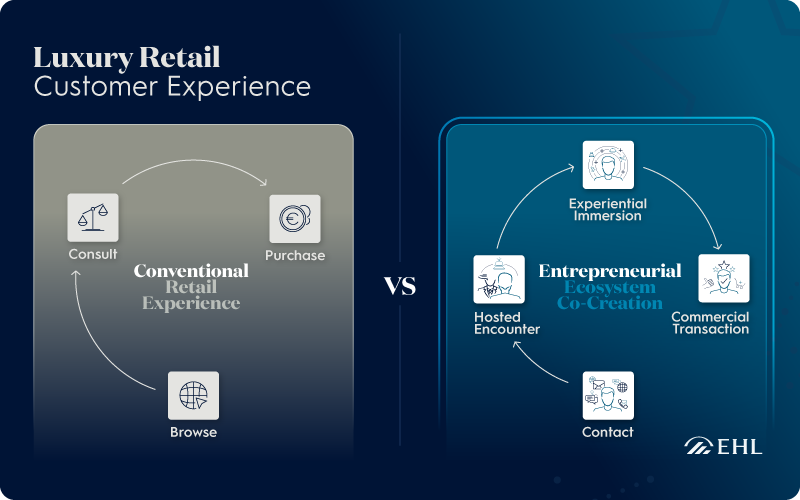
Why this Requires the Right People, Not Just the Right Script
A culturally specific dimension shapes how this plays out in Singapore. Clients are characteristically reluctant to accept experiences when they feel commercial.
The solution is to frame gatherings as organic social occasions, shared interests, informal celebrations, and family events. That requires social intelligence and relational instinct that cannot be scripted. It is exactly the kind of behavior that an innovative mindset makes possible.
Heritage Brands and Newer Brands: the Same Goal, Different Starting Points
How this plays out depends on where a brand sits in the luxury spectrum.
A newer, corporate-owned brand must build every client encounter from scratch: no inherited community, no institutional memory. Each relationship is constructed by hand, and the stakes of getting each one right are high.
A heritage brand with 150-plus years of history has an experiential boutique, a multi-generational client community, and a brand weight that precedes every interaction. The work is not to create the experience, but to deepen and personalize one that already exists.
Same mechanism. Very different starting line. Both require the same disposition in the people delivering it.
The 50/70 Rule: What Your Organization Can and Cannot Do
Here is the finding that reframes the entire talent conversation in luxury retail.
The research identifies what it calls the 50/70 model. It works in three stages:
50% is where everyone starts. Each person arrives with a natural baseline — shaped by personality and background — toward the relational investment and proactiveness that great luxury service requires. This starting point is roughly 50% of what you need.
70% is the individual ceiling. With effort, motivation, and genuine drive, a person can develop their own orientation to around 70%. That is the maximum that individual agency alone can reach.
30% is your organization’s job. The gap between a capable employee and a genuinely exceptional one is not a personal development challenge. It is a leadership and culture challenge, and it falls entirely on you.
That final 30% requires managers who model the behavior they expect, performance systems that reward relational investment rather than penalize the time it takes, and a culture where exceptional service feels like the natural way to work — not an extra expectation layered on top.
What This Means in Practice
For a newer brand, this organizational role needs to be structurally embedded. One boutique studied had a dedicated Head of SEA Experience — a role specifically designed to bridge the gap between what individuals bring and what the brand requires: coaching, motivational investment, and sustained ownership framing.
For a heritage brand, the equivalent infrastructure is cultural rather than structural. Over 150 years of institutional memory transmit the orientation through longstanding client relationships and the gravitational pull of a multi-generational identity. The mechanism differs. The requirement is the same.
The Hiring Implication: the 50% Cannot be Trained In
This is the most important practical takeaway from the 50/70 model.
The foundational disposition — genuine curiosity about the person in front of you, the instinct to invest before there is a guaranteed return — must already be present. An individual who lacks this starting orientation cannot be coached to 70%, let alone to the standard a luxury brand requires.
Hiring for disposition is not a soft preference. It is the prerequisite for everything that follows.
One managing director screens for this with a single interview question.
There is no correct product answer. The question reveals whether a candidate thinks relationally, adapting to the specific person in front of them, or defaults to a generic pitch.
Your Most Loyal Clients Are Your Most Powerful Sales Team
The third mechanism is the most commercially powerful and the most underutilized.
When an innovative mindset operates throughout a boutique, it transforms the organization into an ecosystem. Not just a sales environment, but a network in which every stakeholder — the leadership team, the sales associates, and critically, the client — becomes an active contributor to value.
In this model, the client is the most important node.
Clients who feel a genuine sense of belonging to a boutique become co-architects of its community. They suggest events. They bring friends. They advocate without being asked.
One example from the research: the team organized a birthday celebration not for the client but for their son, because they had identified this client as deeply family-oriented. The gift was not a product. It was recognition of what the client actually cared about most.
That is what relational intelligence looks like in practice. And it cannot be faked.
The 'Supporting' Network: Peer Referral as a Commercial Engine
The research documents a specific phenomenon in Singapore's luxury market, which it calls the 'supporting' network.
Existing clients actively facilitate each other's purchases through informal peer advocacy. One well-managed relationship generates a chain of referrals. Those referrals generate their own, and over time, the community becomes self-sustaining.
This matters because the most valuable luxury clients are largely unreachable through conventional marketing. They do not respond to digital advertising. The only reliable channel into their world is their own social network.
Building the conditions for that network to form is not a marketing strategy. It is a culture-and-talent strategy, and it takes time, consistency, and the right people to make it happen.
The Numbers: What Innovative Mindset Is Actually Worth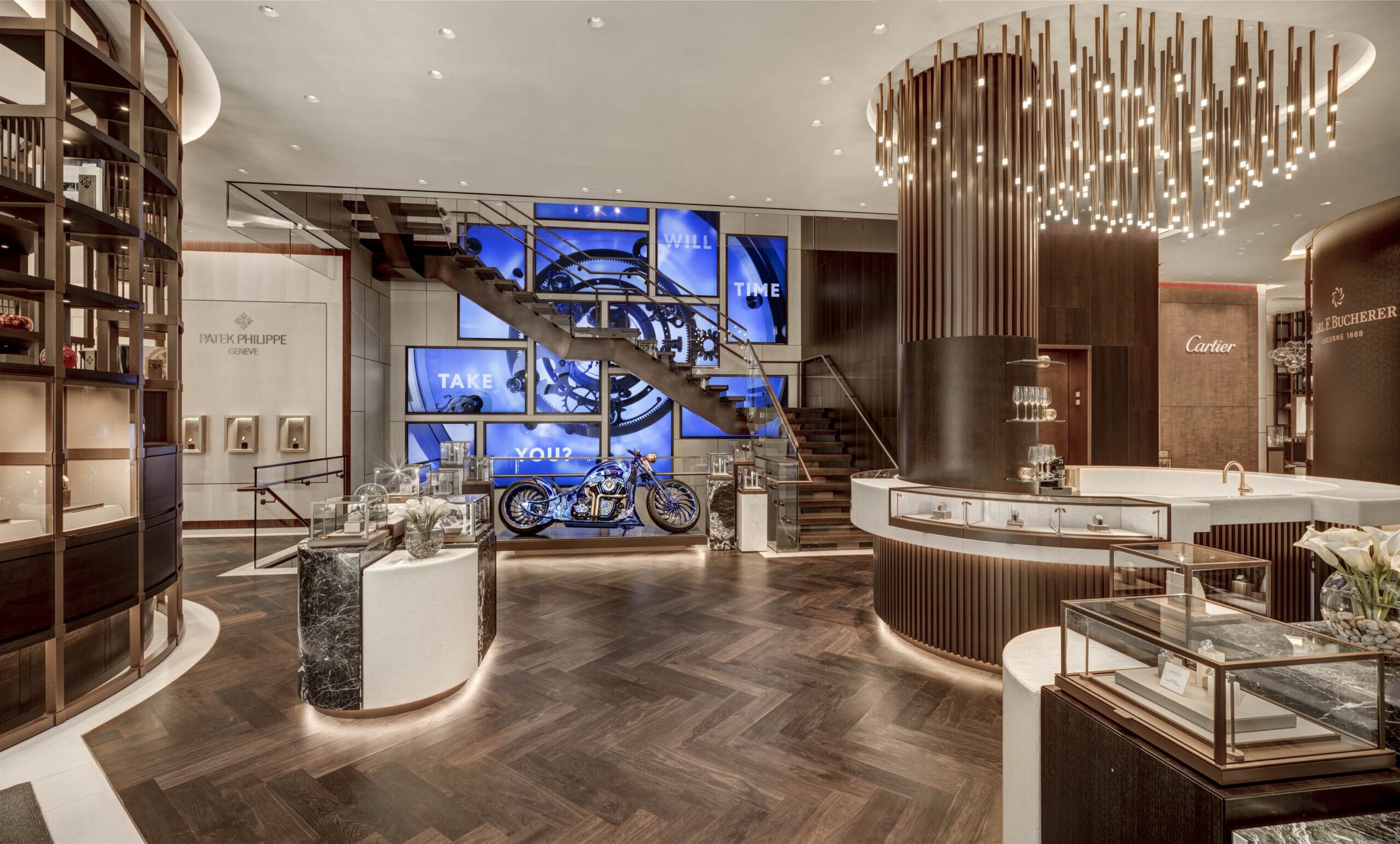
Abstract claims about relationship value are easy to make. Here is the concrete before/after picture, drawn from Singapore field data.
Before: the Transactional Associate
- Client portfolio: 20-30 relationships
- Repeat-purchase rate: below 30%
- Referral rate: near zero
- Average transaction interval: more than 24 months
After: the Innovative Mindset Associate
With the right hiring and development approach, the same role generates measurable improvements across three dimensions: repeat-purchase frequency, referral yield, and average transaction value.
The Singapore Numbers
SGD 100,000 incremental annual revenue per associate from just two additional referrals per year at entry-level pricing of SGD 50,000 per timepiece.
SGD 25,000 is the approximate annual investment per associate in coaching and ecosystem development.
The payback period on that investment is under four months.
And that calculation does not include the long-term relational equity upside: the compounding value of the 'supporting' network, the repeat purchases, and the advocacy that does not appear in monthly KPIs.
The managerial implication is direct. Performance management systems that measure only immediate sales volume are actively counterproductive. The highest-value outputs — referrals, repeat relationships, peer-mediated community formation — are downstream of relational investment that takes time to show up. If your KPIs penalize that investment, your system is working against you.
Three Things to Do Differently
1. Hire for Disposition Before Everything Else
Dispositional screening is the single highest-leverage intervention in your talent strategy — and it happens before training begins.
Look for candidates from concierge, hospitality, and relationship-driven backgrounds. Design interviews to reveal relational instinct, not product knowledge. Use scenario questions that show how someone thinks about people.
The product can be taught. The mindset cannot.
2. Build the Infrastructure That Takes People From 70% to 100%
The cultivable half of innovative mindset requires sustained organizational investment, not a one-time training program.
For newer brands, that means a dedicated role: someone whose specific function is to bridge the gap between what individuals bring to the role and what the brand requires of them.
For heritage brands, it means actively protecting entrepreneurial culture from the governance pressures that growth introduces. The institutional gravity that makes a heritage brand powerful can also make it rigid. The most powerful client moments come from spontaneous, informal behavior — and that requires an environment where people feel safe to act.
3. Redesign Your Performance Metrics
If value is generated through relational investment, measuring only immediate sales is not just incomplete, it is misleading.
The metrics that reflect how luxury service value is actually created are: relationship depth, client retention, referral yield, and experience quality.
Redesigning your performance systems around these indicators is not a soft preference. It is a commercial imperative.
The bottom line: Innovative mindset is not a soft skill. It is a measurable value-creation mechanism with its own commercial logic, its own developmental requirements, and a calculable ROI. The brands that build their talent and culture systems around it are the ones that will define luxury service excellence in the decade ahead.