
Healthcare touch points, such as a hospital stay, are some of the most vulnerable moments in a person's life. While the quality of the medical care that is delivered is of utmost importance, research increasingly confirms that how patients feel throughout their healthcare experience has a direct and measurable impact on treatment outcomes and trust. Implementing hospitality principles in healthcare can significantly improve patient experience.
This article explains what hospitality in healthcare is, how to improve patient experience, and how to implement hospitality in healthcare design.
What is Hospitality in Healthcare?
Hospitality in healthcare refers to the application of service and experience principles from the hospitality industry to clinical and non-clinical aspects of the patient experience.
The words hospitality and hospital are both derived from the word hospes, which is Latin for host. Even beyond the etymology, healthcare and hospitality share the premise of welcoming and taking care of a vulnerable human being by attending to their needs.
Despite this shared foundation, we have arrived in a situation where a patient checking into a hospital for treatment and a guest checking into a hotel might just as well be living in parallel universes.
Can Healthcare Realistically Focus on Hospitality?
Healthcare is focused on treating the person, but not necessarily in making them feel comfortable or met in the process of doing so. This is both understandable and acceptable given the objective, but hospitality thinking can still be very beneficial.
The primary objective of healthcare is to diagnose and treat patients when they need help. This is why operations should be built in a way where the fulfillment of the objective is possible in all situations and as flexibly as possible. Implementing hospitality thinking in healthcare must not jeopardize high-quality clinical diagnosis and treatment.
Furthermore, the healthcare context determines to what extent this is possible. Large public hospitals or healthcare units that are focused on acute cases understandably have less opportunities or space to execute hospitality thinking compared to specialized clinics (e.g., maternity care) or non-acute healthcare.
The idea is not to make hospitals feel like hotels (even though it would be nice) but to understand that the quality of human interactions around their care can significantly impact the discomfort and uncertainty that patients are often feeling.
What is Patient Experience?
Like the customer journey in a hotel, the patient experience encompasses all the touch points a person goes through with a healthcare provider, including scheduling the appointment, treatment, and post-care communication. Patients are often treated by several different people in different parts of the hospital, which makes the secure processing and exchange of personal information a priority.
Healthcare often overlooks touch points that are almost obvious to hospitality, such as how well they are informed about the treatment process, how comfortable their physical environment is, and how supported they feel by the staff around them.
The hospitality industry shows that it is possible to manage the human experience under emotional and logistical pressure, while also doing so consistently and at scale.

Why the Hospital Patient Experience is Important
Improving patient satisfaction in healthcare and hospitals carries significant stakes.
Research shows that non-clinical dimensions of hospital care are linked to measurable health outcomes, and better patient experience is associated with safer and more effective care in a range of different clinical conditions.
A separate study that analyzed data from more than 4,500 US hospitals found that hospitals with higher staff responsiveness scores had significantly lower 30-day readmission rates, which suggests that how patients are treated during their stay does not only affect patient satisfaction but also has clinical consequences.
Both health and business outcomes are improved when the patient is centered in the care process. This is partly because patients who feel informed and respected are more likely to comply with treatment plans and to return to the same healthcare provider.
Hospitality in Healthcare Design: How to Improve Patient Experience in Hospitals
The following approaches are drawn from tried-and-true hospitality practice and supported by research into their application in healthcare settings.
Service Training and Developing Social Skills
Hotels systematically invest in training staff on the non-technical dimensions of service. In fact, for luxury hospitality, active listening, tone of voice, and even body language, are the product, thus service excellence cannot be overlooked.
As the majority of patient complaints are related to communication failures and perceived indifference from healthcare staff, the same training logic could be beneficial in healthcare. Training programs that are modeled on hospitality service training have been shown to improve both patient satisfaction scores and staff well-being.
Anticipating Needs and Standardization
Anticipating guest needs is central to hospitality and is also connected to preempting situations that would require service recovery.
For healthcare, having standardized protocols for non-clinical touch points, such as how patients are greeted upon arrival and how and when they are informed, can significantly reduce the occurrence of problems stemming from the perceived inattentiveness of staff.
The Physical Environment
The physical environment is one of the most underutilized levers in improving patient experience in hospitals. Research consistently demonstrates that well-designed healthcare spaces reduce stress, improve recovery times, lower rates of hospital-acquired infections, and increase patient satisfaction.
Hospitality in healthcare design draws on the same evidence-based principles that guide hotel design, which include natural light, access to nature, single-occupancy rooms, and the quality of both public and private spaces.

Patients in single-occupancy rooms report significantly higher satisfaction with privacy and quality of sleep, as well as a feeling of dignity compared to those in shared accommodation.
The concept of the "healing environment", which is a physical space designed to actively support recovery and well-being, is directly analogous to how the hotel industry approaches spatial design.
Both recognize that the built environment always impacts well-being, and the question is whether it does so positively or negatively.
Staff Experience as a Foundation for Patient Experience
An important consideration that the hospitality industry is still arguably trying to learn, is that a high-quality service experience cannot be delivered on an exhausted and disengaged workforce.
The Four Seasons' founding philosophy is that its greatest asset is its people. For the hotel group, it means investing in working conditions and company culture, for instance, by giving recognition to staff members and having clear routes for career development.
Some Examples:
The Cleveland Clinic has invested in staff lounges that are dedicated spaces for clinical teams to rest and decompress.
The CHUV hospital in Lausanne, on the other hand, has made sure to participate caregivers in their running service design workshops to co-create processes. This gives staff a sense of agency in their work, with the positive side effect of operational improvements.
Silmäasema, Finland's largest eye care and eye health operator, has made staff satisfaction a strategic priority alongside patient experience. The company has invested in digital tools that reduce administrative burden and have established career pathways that allow specialists to grow within the organization. Silmäasema's employee satisfaction score is 4.2 out of 5, while its hospital services NPS reached 94.8, which are among the highest scores in any healthcare setting (Silmäasema).
When staff satisfaction is prioritized, it creates the conditions for the patient experience to follow.
Personalization and Treating Patients as Individuals
One of hospitality's most transferable contributions to healthcare is the discipline of personalization and tailoring the experience to the individual.
In hotels, much of it has to do with remembering a guest's preferences (such as a pillow choice) and catering to them whenever possible. The stakes are absolutely higher in healthcare, and there are many specific and standardized processes that must be followed, but the opportunity is also more significant.
Personalized care has been recognized in research as essential to healthcare quality and ethical practice, and the assessment of individual needs should be the priority over uniform protocols.
The opportunities for personalization are fewer in large healthcare units, but this is also largely a good thing for ensuring that the clinical work meets quality requirements.
Some Examples:
Maternity care is one of the clearest examples in healthcare of how personalization can make a measurable difference with steps towards hospitality-inspired practice.
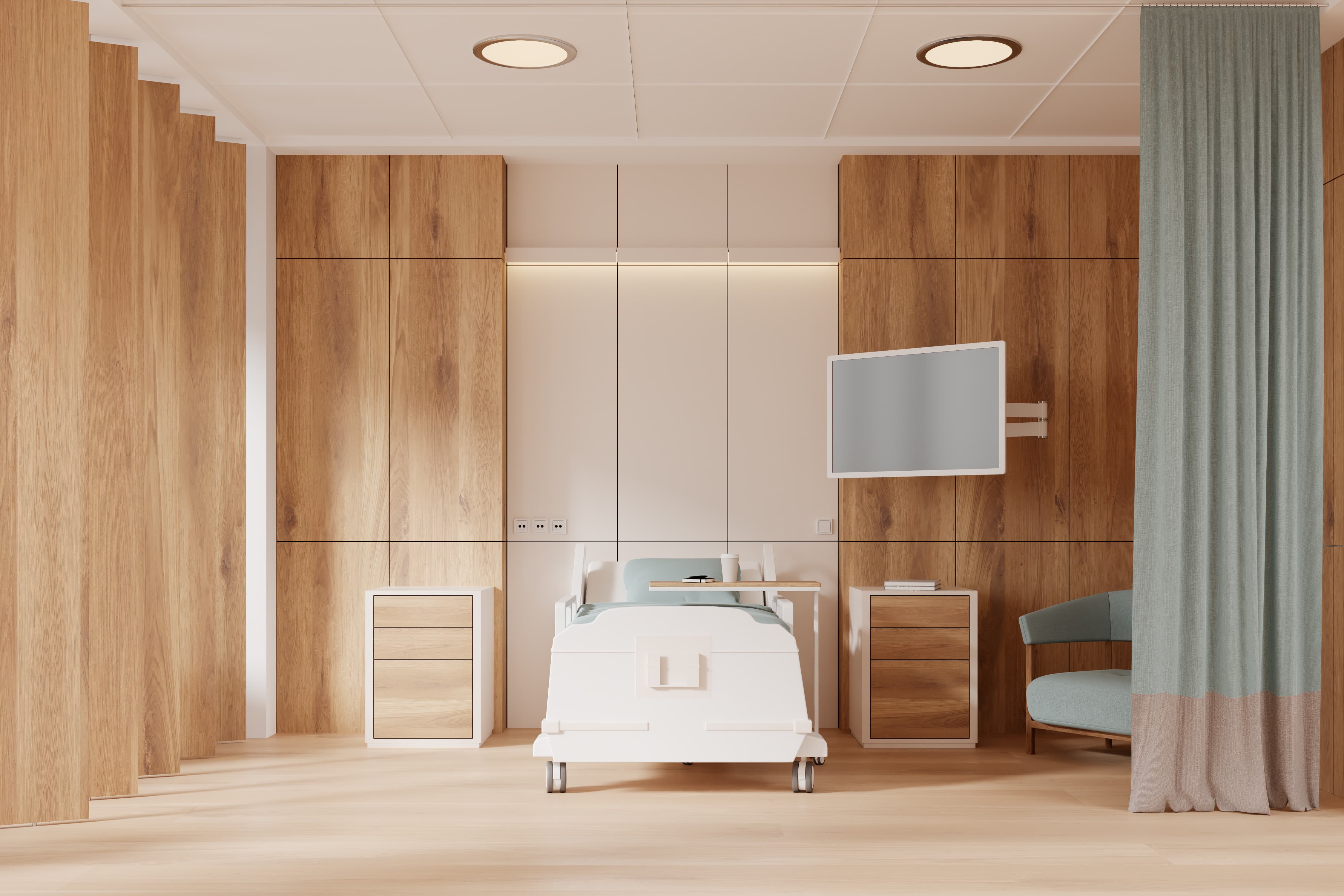
Lakewood Ranch Medical Center in Florida offers each expecting mother a dedicated "Birth Designer";or in layman's terms, a clinical specialist who works with the patient ahead of delivery to understand their preferences and co-create a personalized birth plan.
What differentiates birth centers in general from standard hospitals is the continuity of care and special amenities such as home-like private suites. Moreover, therapeutic modalities such as hydrotherapy are increasingly common offerings.
A peer-reviewed study comparing birth center and hospital outcomes found that birth center delivery was associated with a significantly lower rate of cesarean sections, and crucially, the researchers concluded that this difference could partly be attributed to their low-intervention approach and the trust that is built through personalized and continuous care.
Just as the best hotels move beyond standardized service to anticipate and respond to individual guest preferences, the best healthcare providers are learning to treat care plans as something that is co-created with the patient. This naturally requires investment in process development and staffing models that allow for the continuity of care teams.
Quick Wins: Hospitality Practices that Healthcare Providers can Implement Today
Transforming the patient experience does not always require significant investment, as many of the most effective improvements are behavioral.
The following are low-cost, high-impact practices drawn directly from hospitality:
- Greet every patient by name and make eye contact when they arrive
- Ensure no patient is left standing at a desk or counter without being acknowledged within 30 seconds
- Brief patients on what will happen next at every stage of their visit, or in other words, remove uncertainty wherever possible
- Train staff to narrate what they are doing during examinations or procedures
- Design waiting areas with natural light, comfortable seating, reduced noise, and natural elements when possible
- Create a simple internal system for staff to flag and share positive patient feedback with the team. The Net Promoter Score (NPS) is an example of a great tool that acts as a continuous gauge for the success of the interactions outside the clinical work. In other words, as the patient is not equipped to evaluate the quality of the clinical work, the NPS is largely a hospitality metric.
- End every appointment by asking if the patient has any remaining questions
While some of these points may feel obvious, it is in the standardization and insistence of executing them that makes the biggest difference for the patient experience.
The Bigger Picture: Designing Healthcare around the Human Experience
Moving towards hospitality-informed healthcare is a recognition that medical excellence and human experience reinforce each other as objectives. Patients who feel cared for are more likely to trust their clinical team and recover well, and staff who feel supported are more likely to deliver consistently excellent care.
Improving patient experience in hospitals requires the same strategic commitment that the best hotels bring to guest experience, that is, investment in training, design, working conditions, and standardization.
The tools and frameworks already exist in and can be borrowed from hospitality, and there is a growing body of research on their efficacy.
What healthcare needs in the future is the organizational will to treat and implement human-centeredness in practice, and build patient experience as a discipline.