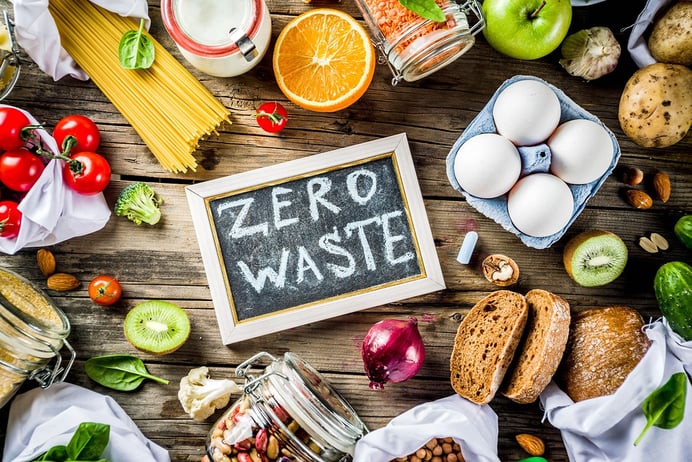
Food waste has become one of the defining sustainability challenges of the 21st century. Beyond its ethical and environmental implications, it reflects a deep inefficiency in global food systems. In hospitality and foodservice, where food is both a core product and an operational variable, innovative food waste management solutions have become not just a sustainability goal but a driver of business innovation.
According to the UN Environment Programme (2024), nearly one billion tonnes of food are wasted globally each year, contributing 8–10% of total greenhouse gas emissions. The foodservice industry’s evolving response signals a broader shift from compliance-based sustainability to a culture of innovation built on data, behavioral science, and collaboration.
The Scale of the Challenge

Food waste in hospitality is multifaceted. It intersects with procurement, storage, menu design, service processes, and guest behavior. The Food and Agriculture Organization (FAO, 2023) estimates that 17% of all food produced is wasted at retail, foodservice, and household levels.
The Boston Consulting Group projects that by 2030, food waste could reach 2.1 billion tonnes annually, equal to 66 tonnes every second if current trends persist.
This contrast is particularly striking when, according to the World Health Organization (WHO), 673 million people experienced hunger in 2024. In hospitality, buffet services, banqueting, and quick-service operations generate disproportionately high post-consumer waste.
The UN’s Sustainable Development Goal 12.3 aims to halve global food waste per capita by 2030, a target where hospitality is uniquely positioned to lead through education and innovation.
Innovation Pathways in Food Waste Management
Technological and Process Innovation
Technology is redefining how kitchens monitor, measure, and mitigate waste. AI, image recognition, and IoT sensors now quantify what was once invisible.
Swiss startup Kitro, co-founded by EHL alumni, uses smart scales and AI analytics to provide real-time waste tracking. Similar tools like Winnow Solutions and Leanpath employ predictive models to guide purchasing and portioning decisions.
According to the 2024/25 Winnow Impact Report, partners achieve a 42% reduction in food waste within the first six months of implementing the technology. As prevention practices mature and behavioral changes take hold, average reductions exceed 50% over time.
Some hotels are now redesigning buffet layouts into à la carte or hybrid digital ordering systems, aligning production with demand while enhancing guest experience.
Beyond the kitchen, partnerships with local farmers, food redistribution networks, and surplus marketplaces such as Too Good To Go extend the food lifecycle and reinforce circular economy principles.
These collaborations form open innovation ecosystems, where knowledge flows between hospitality operators, technology firms, and social enterprises.
Organizational Learning and Collaboration

Technology alone cannot solve food waste. The real transformation happens when organizational learning and culture evolve.
Research from the Centre of Excellence for Food Service shows that food waste reduction works best when it’s part of daily operations rather than a compliance task. Their findings reveal that engaging staff and fostering awareness lead to lasting improvements, with participating foodservice businesses cutting waste by up to 23% over time. The results highlight that meaningful change depends as much on culture and mindset as on technical measures.
Major hospitality groups are embedding this philosophy. Accor’s Planet 21 program sets waste-reduction goals and integrates sustainability into culinary training. Marriott International’s Serve 360 strategy links executive performance incentives to measurable waste outcomes.
At EHL, students analyze live data from partner restaurants through the Sustainability Innovation Lab, applying theory to real operational contexts.

Culture, Leadership, and Systemic Change
Effective food waste management ultimately depends on strong leadership and a culture of continuous transformation. Recent research shows that supportive and engaged leaders play a pivotal role in driving sustainable innovation within hospitality organizations. It was found that such leadership fosters employees’ green innovative behaviors by cultivating an empowering and collaborative work environment, conditions that are vital for advancing initiatives like food waste management solutions across the sector.
Chefs such as Massimo Bottura exemplify this mindset through his Food for Soul initiative, which turns surplus food into community meals. Universities and hotel schools similarly act as living laboratories that model circular systems in practice.
Behavioral science plays a vital role. Visual cues, smaller portions, and redesigned menus help nudge guests toward sustainable behavior. A case-study published in Sustainability (2024) observed two corporate canteens and found waste reductions of 44%–66% over six months after implementing changes such as smaller portions, staff awareness training, and processing surplus into soup.
Finally, integrated ESG reporting connects food waste metrics with investor transparency and performance dashboards, placing sustainability alongside revenue and satisfaction as a core business indicator.
The Future of Food Waste Management Solutions
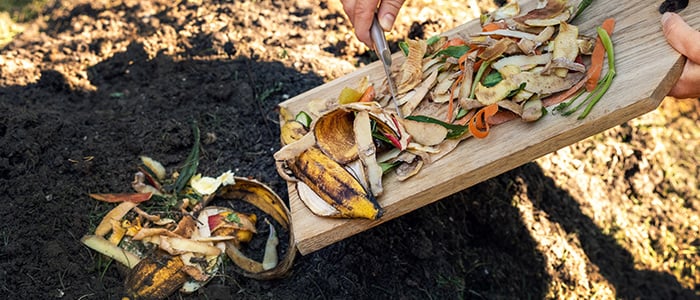
Food systems are evolving, and the way we measure value must evolve too. Innovation in food waste management solutions is not just about technology but about a mindset that links operational efficiency with social and environmental purpose.
The hospitality sector holds a unique advantage: daily interaction with guests, suppliers, and communities. By leveraging this network, the industry can become a global model for achieving UN SDG 12.3 by 2030.
Institutions such as EHL Hospitality Business School play a crucial role in driving this transformation through research, partnerships, and leadership development.
Reducing food waste is not only about saving food. It is about redefining hospitality, creating experiences that nourish people, planet, and profit in equal measure.