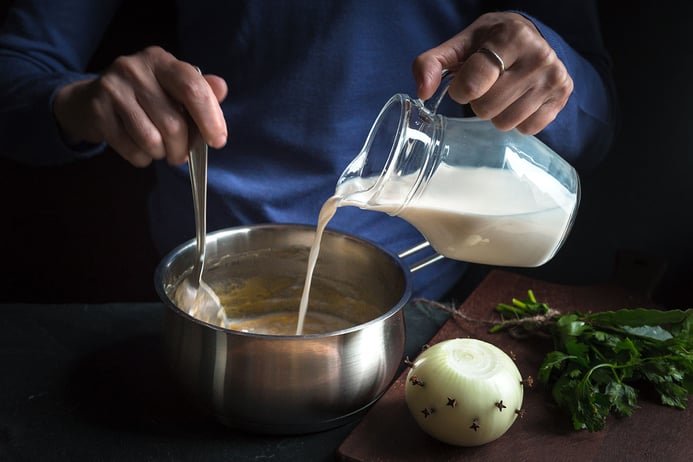
The 5 mother sauces are a cornerstone of French cuisine and worth knowing inside out. Much like a bartender is judged on their martini, a chef is often judged by how confidently and consistently they handle the mother sauces.
The system most kitchens follow today was formalized by Auguste Escoffier in the early 20th century, building on earlier classifications developed by Marie-Antoine Carême in his 1833 reference cookbook: L’art de la cuisine française au XIXe siècle.
Carême laid the groundwork by grouping sauces into families, which Escoffier later refined into the five foundational sauces still taught in culinary schools.
Aspiring culinary students should commit these sauces to memory as the building blocks from which their sauce repertoire will grow. By adjusting their basic formulas, you can create hundreds of unique and delicious sauces.
In this article, you will learn about each of the five mother sauces, how they are prepared, and how they have been used throughout the history of classical cuisine.
What Are the 5 Mother Sauces?
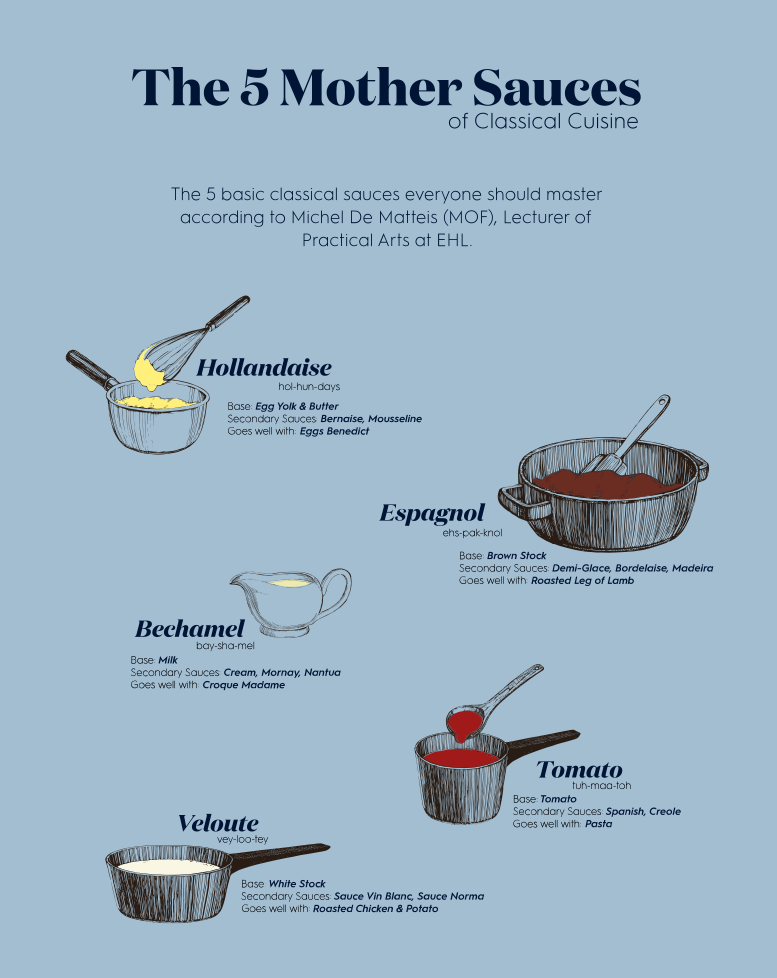
Sauces can be served cold (mayonnaise), lukewarm (pesto), or warm (Béchamel), and can even be savory or sweet (Coulis). At its very basic purpose, sauces should harmonize the flavors of the main ingredients on the plate, as well as their texture and cooking method.
When Carême was creating this classification he discovered that all sauces comprised of the same 3 elements:
-
a liquid (base),
-
a thickener,
-
and seasoning.
A roux is the thickening agent used in four of the mother sauces. To create a classic roux, you must stir equal parts of flour and butter over medium-low heat for three to five minutes for a light roux, six to seven minutes for a brown roux, and up to 15 minutes for a dark roux.
The base and seasoning are quite straightforward. Discover Carême's classification of the mother sauces below.
1. Béchamel
Base: Milk
Thickener: Roux (butter + flour)
Fat: Butter
Core flavor profile: Creamy, mild, neutral
Common aromatics: Bay leaf, onion, clove, nutmeg
Classic derivatives: Mornay, Soubise, Nantua
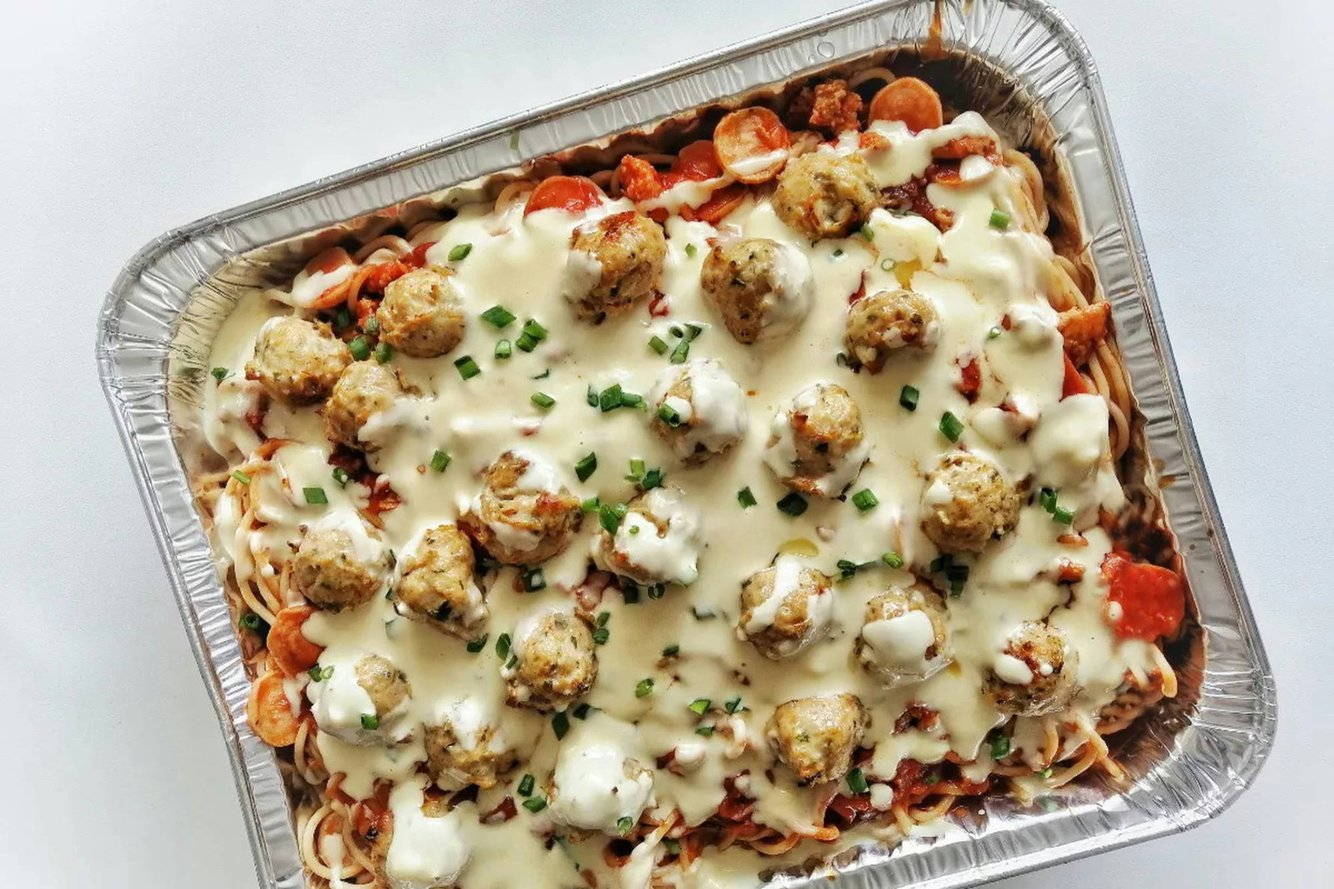
Best with: Pasta bakes, gratins, vegetables, poultry
Béchamel is the classic white sauce you’ll recognize from comfort dishes like chicken pot pie, macaroni and cheese, scalloped potatoes, lasagne, and many styles of gravy. Its flavor is intentionally subtle, which is what makes it so useful. Rather than overpowering a dish, it adds body, richness, and a smooth, cohesive texture that brings ingredients together.
In classical cuisine, béchamel is often served with gently cooked foods such as fish, eggs, and steamed chicken. The sauce adds creaminess without masking delicate flavors, making it a common choice for lighter proteins and vegetables that benefit from a richer mouthfeel.
Core ingredients:
-
Butter
-
Flour
-
Milk
-
Salt and pepper
-
Optional aromatics such as bay leaf, nutmeg, onion, clove
-
Optional additions such as cheese for derivative sauces
Basic method:
-
Melt butter gently in a saucepan
-
Stir in flour to form a smooth paste (roux)
-
Cook the roux briefly to remove the raw flour taste
-
Gradually add milk while whisking to prevent lumps
-
Simmer until thickened and smooth
-
Season and finish with aromatics or flavor additions
Béchamel can be thought of as a base rather than a finished sauce. A handful of small adjustments can turn it into cheese sauce for pasta, a topping for baked vegetables, or the foundation for more complex classical derivatives.
2. Velouté
Base: White stock (chicken, fish, or vegetable)
Thickener: Roux
Fat: Butter
Core flavor profile: Light, savory, clean
Common aromatics: Onion, herbs, white wine, lemon
Classic derivatives: Allemande, Suprême, Vin blanc
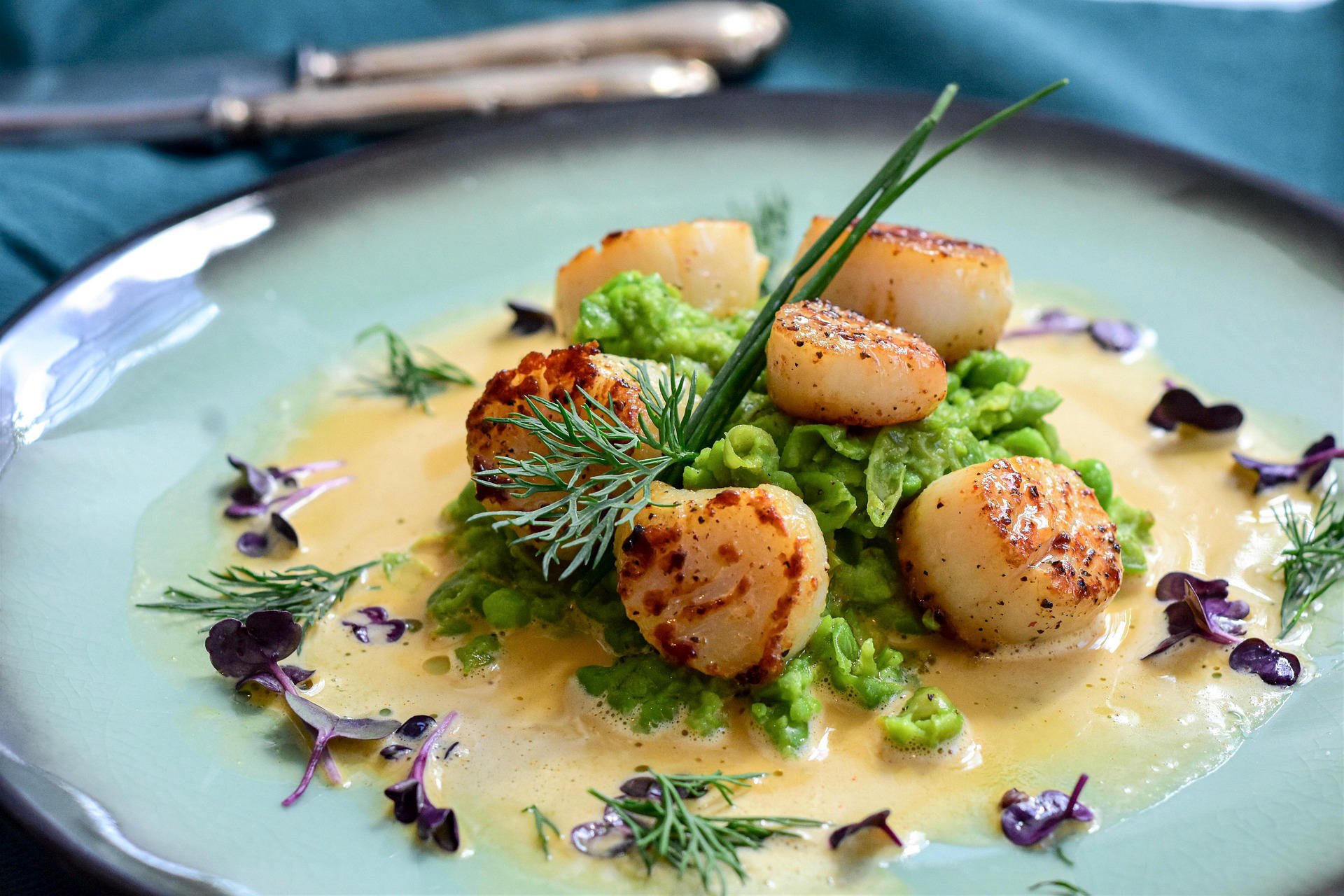
Best with: Fish, chicken, delicate vegetables
Velouté takes its name from the French word for “velvet,” which neatly describes its smooth, soft texture. It is one of the lighter mother sauces, built to support gentle flavors rather than dominate them. Where béchamel leans creamy and rich, velouté stays savory and restrained, making it especially well suited to subtle proteins and vegetables.
The sauce is made by combining a pale roux with a clear stock. Chicken and fish stock are the most traditional bases, though vegetable stock is commonly used in modern kitchens. The choice of stock shapes the final flavor, which is why velouté adapts so easily to different dishes and cuisines.
Core ingredients:
-
Butter
-
Flour
-
White stock (chicken, fish, or vegetable)
-
Salt and white pepper
-
Optional aromatics such as onion, herbs, lemon, or white wine
Basic method:
-
Melt butter gently in a saucepan
-
Stir in flour to form a smooth roux
-
Cook the roux briefly without browning
-
Gradually add warm stock while whisking
-
Simmer until the sauce thickens and becomes silky
-
Season and finish with aromatics or acidity as needed
Velouté is most often served with poached or steamed fish and chicken, where its clean flavor complements delicate meat without overwhelming it. With small additions like wine, lemon, or enriched cream finishes, it also becomes the starting point for several classical derivative sauces.

3. Espagnole
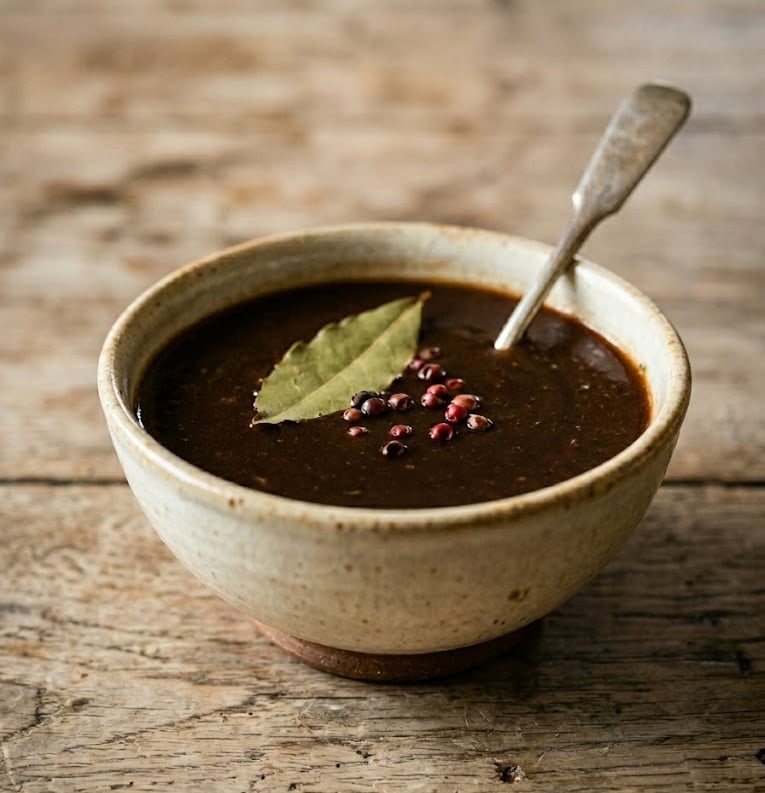
Base: Brown stock (beef or veal)
Thickener: Brown roux
Fat: Butter
Core flavor profile: Rich, deep, savory
Common aromatics: Mirepoix, tomato, herbs
Classic derivatives: Demi-glace, Bordelaise, Chasseur
Best with: Beef, lamb, game, braised dishes
Espagnole is the darkest and most robust of the mother sauces, built to bring depth and savory richness to hearty dishes. It underpins classics such as boeuf bourguignon and appears throughout traditional French cooking as the base for deeper, more complex sauces.
In practice, espagnole is rarely served on its own. It exists primarily as a foundation for derivative sauces, most notably demi-glace, as well as bordelaise and chasseur.
The flavor of espagnole comes from layered browning. Unlike béchamel and velouté, which use a pale roux, espagnole relies on a deeply cooked roux and browned vegetables to develop color and complexity before stock is added.
Core ingredients:
-
Butter
-
Flour
-
Brown stock (beef or veal)
-
Mirepoix (onion, carrot, celery)
-
Tomato (purée or cooked down)
-
Herbs and aromatics
-
Salt and pepper
Basic method:
-
Cook butter and flour together until the roux turns a deep brown
-
Stir frequently to prevent scorching
-
Brown mirepoix separately to deepen flavor
-
Combine the roux with the vegetables
-
Add tomato and brown stock
-
Simmer slowly to develop richness and body
-
Strain or refine as needed for a smooth finish
Because espagnole is so concentrated, it is typically reduced further or blended into derivative sauces rather than used as a finished sauce on the plate. Mastering it teaches control over browning, reduction, and flavor layering, which are core culinary skills.
4. Sauce Tomate
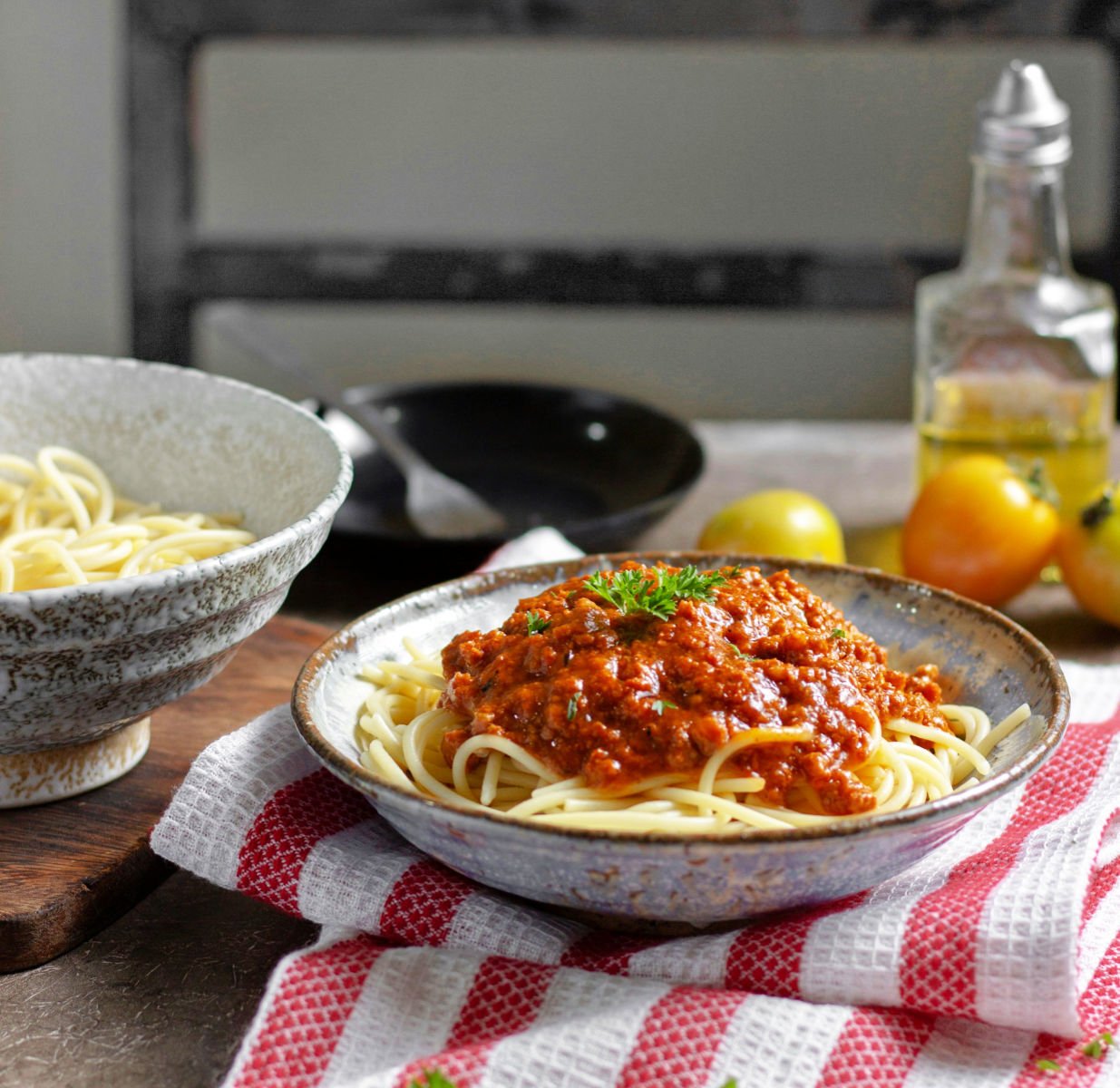
Base: Tomatoes
Thickener: Reduction (optional roux, traditionally)
Fat: Olive oil or pork fat
Core flavor profile: Bright, savory, slightly acidic
Common aromatics: Onion, garlic, herbs
Classic derivatives: Provençale, Creole, Spanish-style tomato
Best with: Pasta, polenta, meatballs, vegetables
Sauce tomate sits a little apart from the other mother sauces. While it shares a name with Italian tomato sauces, the classical French version is built with more structure and a deeper savory base. Historically, it was treated as a true “constructed” sauce, rather than simply tomatoes simmered down, which is why it earned its place among the mother sauces.
In everyday cooking, sauce tomate shows up in familiar places: folded through gnocchi, spooned over polenta, or used to anchor dishes with grilled meat and vegetables. The sauce brings acidity and warmth to richer foods, cutting through fat while adding body and depth.
Core ingredients:
-
Tomatoes (fresh or preserved)
-
Olive oil or rendered pork fat
-
Onion
-
Garlic
-
Herbs and aromatics
-
Optional additions such as pork trimmings or bacon for depth
-
Salt and pepper
Basic method:
-
Gently cook aromatics in fat until softened
-
Add tomatoes and allow them to break down
-
Simmer slowly to concentrate flavor and thicken naturally
-
Season and adjust acidity as needed
-
Enrich with savory elements if desired
In Carême’s time, sauce tomate was thickened with a roux, but modern versions rely on reduction to build body and intensity. The result is a sauce that can stand on its own or act as a base for countless variations, from herb-forward Provençale styles to richer, spiced derivatives.
5. Hollandaise
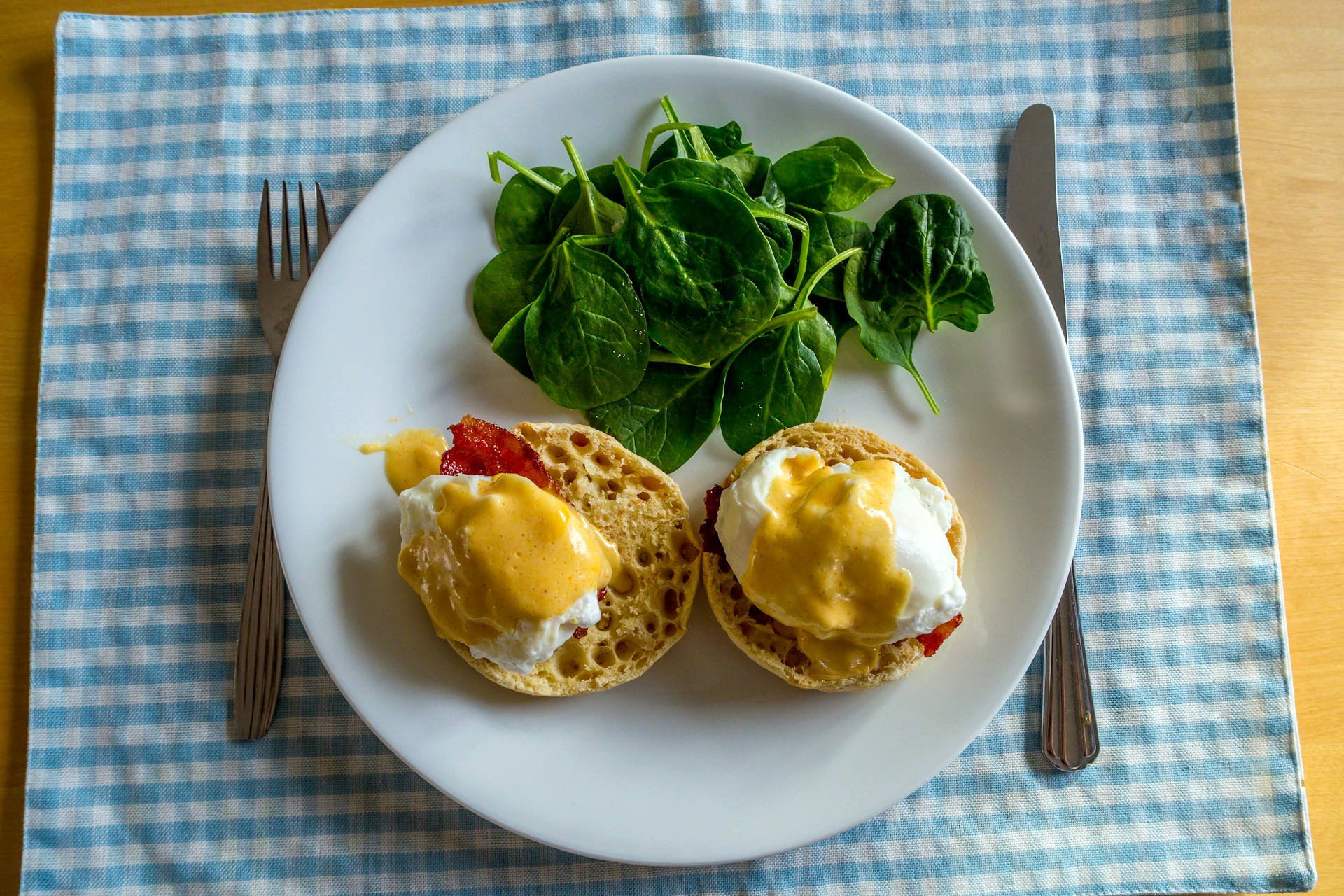
Base: None (emulsion-based)
Thickener: Egg yolks (emulsification)
Fat: Clarified butter
Core flavor profile: Rich, buttery, tangy
Common aromatics: Lemon juice, vinegar, cayenne
Classic derivatives: Béarnaise, Choron, Maltaise
Best with: Eggs, asparagus, fish, lighter meats
Hollandaise is often people’s first introduction to classical French sauces, thanks to its starring role in eggs Benedict and its close pairing with lightly steamed asparagus. Unlike the other mother sauces, it is not built on stock or milk.
Instead, it relies on an emulsion, which gives it its signature richness and glossy finish. Like sauce tomate, Hollandaise was formalized later than Carême’s original classifications, but it has become central to classical technique.
At its core, Hollandaise is about balance. The butter provides richness, the egg yolks give body, and a small amount of acidity keeps the sauce from feeling heavy. This balance is what allows it to sit comfortably alongside both delicate foods like fish and richer cuts of meat.
Core ingredients:
-
Egg yolks
-
Clarified butter
-
Lemon juice or vinegar
-
Salt
-
Optional flavorings such as cayenne or white pepper
Basic method:
-
Gently warm egg yolks over indirect heat while whisking
-
Add melted butter slowly to form an emulsion
-
Maintain gentle heat to avoid curdling
-
Season and adjust acidity to taste
-
Keep warm and serve promptly
Hollandaise is often where new cooks run into trouble, as the emulsion can split if the temperature rises too quickly or the butter is added too fast. Once you get a feel for heat control and timing, though, the technique becomes far less intimidating and opens the door to a whole family of derivative sauces, including Béarnaise.
FAQs
Mastering the mother sauces is a rite of passage for any home cook, but the transition from theory to the stove often brings up a few technical hurdles.
Whether you are curious about the true number of mother sauces or just trying to keep your Béchamel from clumping, these answers will help clarify the essentials.
What is the hardest mother sauce to make?
Hollandaise is widely considered the most technically volatile due to its reliance on a narrow temperature window for a stable emulsion. If the egg yolks get too hot, they scramble; if the butter is added too quickly or the sauce cools too much, the emulsion "breaks" and the fats separate.
Beyond Hollandaise, a true Espagnole is difficult because of the time and precision required to develop a deep, clarified umami through a dark roux and long-simmered veal stock without introducing bitterness.
What are the most common ways a mother sauce "breaks"?
Temperature control and fat ratios are the primary culprits. In emulsions like Hollandaise, adding butter too quickly or letting the heat rise above 145°F (63°C) will cause the proteins to denature and the fat to separate.
For roux-based sauces like Béchamel, whisking cold milk into a hot roux (or vice-versa) is essential to prevent the starch from clumping into "flour balls" that ruin the silkiness of the texture.
Are there really only five mother sauces?
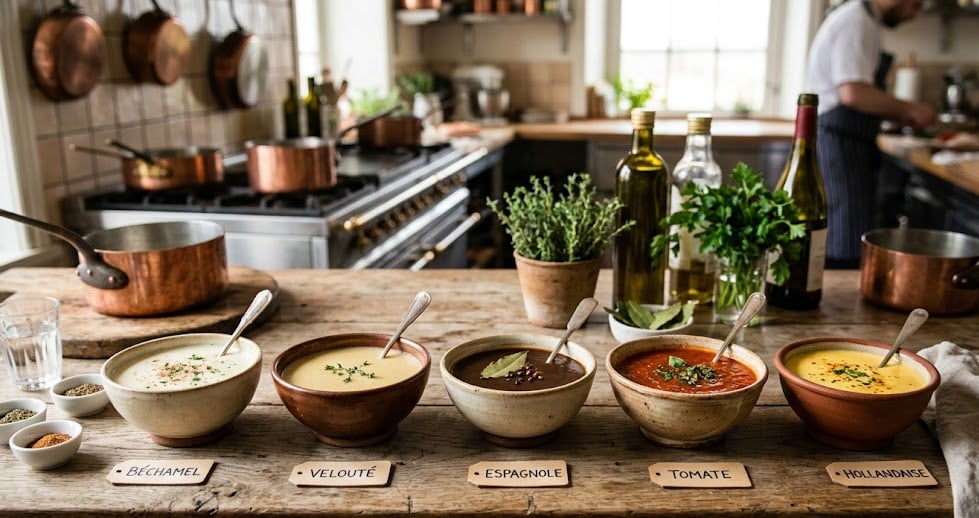
In the rigid taxonomy of classical French cuisine, yes. This quintet (Béchamel, Velouté, Espagnole, Sauce Tomate, and Hollandaise) was codified by Auguste Escoffier in the early 20th century as a refinement of Marie-Antoine Carême’s original four.
While these five serve as the pedagogical bedrock of culinary school, the "mother" designation is a functional framework for categorization, not an exhaustive limit on sauce-making.
Fun fact: Marie-Antoine Carême is the reason why chefs wear white.
What is considered the 6th mother sauce?
There isn’t an officially recognized sixth mother sauce in classical French cuisine. The debate usually centers on Mayonnaise or a Pan Sauce (Jus de Viande). Mayonnaise is the strongest candidate due to its role as a cold emulsion for derivatives like Remoulade and Aioli.
However, because Hollandaise is already the representative warm emulsion, traditionalists argue a 6th category is redundant. Modern perspectives occasionally suggest a "Vinaigrette" or even "Pesto" as contemporary mothers that govern the logic of global cold-sauce preparations.
Is Sauce Tomate still used in professional kitchens?
Rarely. The traditional French mother sauce for tomato involves a roux, salt pork, and a long simmer with veal stock.
Most modern chefs (even in high-end French dining) prefer the Italian-influenced pomodoro style, which relies on high-quality tomatoes, aromatics, and reduction rather than starch thickening to achieve body.
Can mother sauces be made vegan or vegetarian?
Absolutely. While Espagnole traditionally demands a rich veal stock for its gelatinous mouthfeel, modern plant-based versions utilize roasted mushrooms, tomato paste, and soy sauce to mimic that deep umami.
For Béchamel, high-fat plant milks (like oat or cashew) paired with vegan butter or oil-based roux can create a nearly identical viscosity.
Are American mother sauces a thing?
Culinary enthusiasts often argue that regional traditions have created their own "mothers." For example, in the American South, white gravy (a variation of Béchamel using meat drippings) serves as the foundation for countless dishes.
Others suggest that in modern American home cooking, BBQ sauce or even Ranch dressing acts as a "mother" due to the sheer number of derivatives and applications they inspire.
How do I fix a sauce that is too thin without making it floury?
If you’ve already completed the sauce and it lacks body, a beurre manié (equal parts raw flour and butter kneaded together) can be whisked in in small amounts.
However, for a cleaner finish, many chefs prefer a "mounting" technique (monter au beurre), that is, whisking in cold cubes of butter off the heat to add gloss and temporary thickness through a light emulsion.
Summing Up
Even though modern kitchens use shortcuts and ready-made sauces, the logic behind the mother sauces still underpins professional cooking today.
Once you understand how to balance fat, liquid, and thickener, you can improvise sauces on the fly using what you already have in your fridge. This is why culinary schools still teach mother sauces: they train your palate, your technique, and your confidence at the same time.
When you figure out how each sauce works, you stop relying on recipes and start cooking with confidence. Master the bases, and the variations take care of themselves.