Dealing with guests isn't always easy. They can be demanding, rude, unclear, and a whole range of other unpleasant things that might make your blood boil, your heart pound, or a tear form in the corner of your eyes.
And let's be honest: maintaining a positive and collaborative working environment comes with its own emotional challenges, especially when things are extra busy and everyone's running on adrenaline.
Emotional intelligence (EI) is what allows you to assess a situation without getting overtaken by it and respond from a place of choice rather than impulse. It's an essential skill for those working in hospitality, and not just in moments of conflict.
How guests feel that they are treated is a big part of their experience, and someone who feels heard and respected will always leave with a more positive impression than someone who believes they only got the facilities and services they paid for, but not the care they needed.
As EHL Passug's Senior Lecturer Daniel Ciappoini says: "If a hotel’s guests feel consistently understood, the establishment is already quite likely to outperform its competitors."
Our emotional intelligence skills list below provides an easy overview of the skills you need to master to improve your EI. But first, let's get clear on what emotional intelligence is.
What is Emotional Intelligence?
Emotional intelligence is the ability to recognize, understand, and manage one’s own emotions, while also being able to recognize, understand, and attune to the emotions of others. The term is often used interchangeably with "Emotional Quotient" (EQ). While both point to the same things, EI refers to the broader concept, while EQ is an emotional intelligence score obtained by taking one of the several EQ tests out there.
Since emotionally intelligent people are highly aware of their own emotions, they can more easily identify and manage them. These types of people are also typically sensitive to how others feel and what they may be experiencing, which often makes them exceptional team leaders and coworkers.
Hospitality managers and staff can assess which emotional intelligence skills they and their colleagues should work on and take steps to improve them. And if you're thinking of studying for a job in hospitality, EHL helps students hone their EI by emphasizing group work, promoting internships, and offering chances to work at on-campus hospitality outlets.

The Importance of Emotional Intelligence in Hospitality
Your staff can make or break a guest's experience to the point where someone might not want to return and could go as far as telling their friends and family to avoid your business. An attentive and kind staff member, on the other hand, can often make up for any hiccups that occurred.
But emotional intelligence is not just a must for customer-facing personnel. It's what makes staff feel understood by their managers, what helps managers motivate their team members, and what makes teams collaborate smoothly.
As Ciapponi explains:
"A high level of emotional intelligence on the part of managers is essential for building a strong team that is motivated to give its best, whether in the kitchen, the dining room, or at reception. In a team where feelings are valued and there is a culture of empathy and understanding, employees are more likely to feel and perform at their best. Not only does this make for a better guest experience, but it should have a significant positive impact on employee retention levels and absenteeism."
And if you're looking for a job in hospitality, being able to demonstrate strong emotional intelligence is more likely to land you one. Even if you're planning to use a job in hospitality as a stepping stone to another career, it's a good idea to develop your EI. The skills that come with being emotionally intelligent are transferable to other industries and highly valuable in your personal life as well.
Emotional Intelligence Skills List for Hospitality Workers
Regardless of whether you're working in management, client-facing, or backend, the following skills are indispensable for providing an excellent customer experience and creating a collaborative work environment.
Self-Awareness
Self-awareness is the skill of noticing and understanding your emotions as well as how they influence your actions. Sometimes, that's easy. When a guest is rude to you, it might not be that hard to notice that you're feeling anger or even shame.
However, many people will get angry without realizing: "Anger is arising within me." In other words, they lack the conscious acknowledgement that an emotional shift is happening and consequently fail to control any impulsive behavior that may come from that feeling.
Other times, you might notice your mood shifting without fully understanding why or how. Training your self-awareness can help with that.
How to train self-awareness
The key to practicing self-awareness is checking in with yourself. Take a moment to assess how you feel and ask yourself what that feeling is and where it comes from.
It's not always possible to do this while you're attending to guests or in the middle of a meeting, and that's okay. We oftentimes get a clearer perspective when there's some distance between us and an event or an emotion.
Checking in with yourself can look like:
- Going to the restroom or another quiet place and taking a moment for yourself.
- Journaling about your day when you get home.
- Talking through an event with a skilled therapist or somatic practitioner.
- Doing a body scan to notice where you hold tension.
- Using a Wheel of Emotions to help you name how you're feeling.
Even when you're busy, you can train yourself to take just three deep breaths at certain times of the day and try to name what you're feeling in that moment. The more you practice, the more your awareness will grow.
Emotional Regulation
Emotional regulation is not the same as trying to get rid of your emotions or suppressing them. It's the act of bringing yourself back to a state in which you feel level-headed enough to assess the situation and deal with what's in front of you from a calmer place.
While emotional regulation helps us be more pleasant coworkers and behave in more helpful and productive ways towards guests, it is not an outward practice. It's what you do to have a conscious choice in how you act, rather than letting your emotions get the best of you.
How to train self-regulation
Regulating your emotions is often easiest when you can take a moment for yourself, or when you can spend time with someone you feel comfortable with (the latter is called "co-regulation). But even if you're in the middle of a heated conversation, there are ways in which you can regulate yourself.
1. Whatever is happening, practice pausing. When you pause before you respond or react, it gives you the time to take a breath and think about how you want to respond.
2. If you can and need to, leave the situation so you can regulate more thoroughly before getting back to it.
3. According to neuroanatmist Dr. Jill Bolte Taylor as mentioned in her book My Stroke of Insight (2008), the physiological sensation of an emotion (for example, the release of stress hormones) only lasts for 90 seconds if we allow ourselves to feel the emotion and let it run its course. Its when we ignore or feed it that it with thought lasts (a lot) longer.
Examples of self-regulation practices:
- Shake it out. This is literally what animals do when they've just gone through a stressful situation. Shake your limbs, jump up and down, move that energy.
- Look around the room and name 5 things you can see, four things you can touch from where you are, three things you can hear, two things you can smell, and one thing you can taste.
- Look around and spot as many things as you can in a certain color.
- Hug yourself while comforting yourself. Tell yourself what you wish someone else would say to you.
- Go for a walk.
- Hum. Humming stimulates the vagus nerve and has a regulating effect.
Lastly, your breath is a powerful tool, and various breathing techniques are proven to help us feel calmer. Some of these you'll need to be alone for, but others you can practice even when talking to a guest or a coworker:
- Box breathing: breathe in for 4 seconds, hold for 4, breathe out for 4, hold for 4, repeat
- 4-7-8 breathing: breathe in for 4, hold for 7, breathe out for 8
- The physiological sigh: take a deep breath in, take another deep breath in until your lungs are full, then breathe out slowly
When you breathe, it's important to breathe into your diaphragm, not your chest. The latter will make you more agitated or anxious.
Self-regulation and self-awareness go hand-in-hand. You need to be regulated enough to recognize which emotions are presenting themselves, and aware enough to notice when you're emotions are threatening to run the show, and you should pause.
Active Listening
Active listening sounds easier than it is. How often are you already doing things on the computer while a guest is still talking to you? Or maybe you tend to think about the next thing you need to do while someone is sharing a concern?
states Ciapponi
"While employees may not have the time to stop, they should make a conscious effort to pause, look and listen to each individual guest. Not listening can be the single biggest cause of service errors and the prime source of guest frustration. In addition, by not looking, opportunities to pick up on cues that would allow staff to provide personalised service may be missed"
Active listening means keeping your full attention on what the other person is sharing and doing your best to understand them. It includes:
- Remaining fully present with what the other person is saying.
- Not interrupting.
- Keeping eye contact (but not in a creepy way).
- Paraphrasing what the other person said to make sure you understood correctly.
- Asking open-ended questions to gather more information.
- Keeping the focus on the other person and their experience.
- Giving verbal and non-verbal cues that indicate you're paying attention.
- Withhold judgment so the other feels comfortable to keep sharing.
Be careful, though. A lot of us have learned to nod our heads and make "hm hm" sounds to make other people feel like we're listening, while we're actually distracted or a bit zoned out. Only give cues like that when they're honest. It's not unlikely that your conversation partner will pick up on it when they're not.
Active listening also consists of picking up on changes in non-verbal cues and showing empathy. We'll talk about those further down this list.
How to train active listening
It's simple but not easy: be curious and listen. That's it. Pay full attention to what the other person is telling you, do your best to understand them, ask clarifying questions as needed, and show them that you are truly listening.
More than specific techniques, active listening requires your conscious decision to stay present and patient with the other. Practicing it with someone you actually enjoy listening to (a friend, for example) can help you implement it better in work situations as well.
Non-verbal Reading
Non-verbal reading is the ability to notice and understand changes in someone's body language and how those may impact an interaction. While non-verbal cues don't always mean the same thing in different people, you can learn to pick up on them and what they might mean through practice and experience.
- When someone crosses their arms, they likely feel defensive or want to protect themselves.
- When someone starts shouting, they're likely dysregulated, and it's best to de-escalate before trying to solve the issue.
- When someone faces away from you, they're likely uncomfortable, uninterested, or wanting to get away.
How to train non-verbal reading
You could take the more academic route and read some articles or watch some videos on body language, and/or you could take a deductive approach and start spotting patterns.
With coworkers, that could look like learning that "when Lisa from HR starts speaking fast, that means she's scared to share what she's sharing, and I should try to put her at ease."
With guests, that could mean observing that "when a guest ignores staff, they might be socially anxious and we're best to remain kind but not force conversation on them."
Empathy
 Empathy is the ability to look at things from another person's perspective and understand how they are feeling. It's not the same as being kind without understanding why someone is upset/angry/grateful/…
We all want to feel seen and heard, and when guests pay for a service, it's understandable that they expect empathy to be part of the package.
We often talk about empathy as if it's an unchangeable trait. Luckily, that's not the case. Empathy may come easier to some than to others, but it's still a skill you can get better at.
How to train empathy
- Practice Active Listening.
- Consume stories (books, movies, …) by a diverse range of creators, featuring different types of characters.
- Engage in conversation with people who normally wouldn't be part of your circles.
- Regularly do loving-kindness meditations. You can find a lot of them on YouTube.
Situational and cultural awareness
Having situational and cultural awareness comes down to taking into account the context of someone's experience as well as their cultural background. When you're dealing with guests, that means staying informed about big events in their home country and knowing enough about their culture not to say or do anything inappropriate.
When you're dealing with coworkers, a manager, or staff, the same applies. Only now you probably also have a bit of personal information you'll want to take into account. Perhaps a coworker has been short with you, but you know someone close to them is dealing with health issues. That doesn't excuse their behavior, but it does put it into context and hopefully generates some empathy on your end.
How to train situational and cultural awareness
- Stay up-to-date on world events.
- Learn about different cultures.
- Let staff try out different roles for a day or two, so they gain a better understanding of the work their colleagues do.
Emotional Intelligence Skills vs Soft Skills
Emotional intelligence skills are often confused with soft skills. While both point to intra- and interpersonal abilities, soft skills are broader and also include skills that require emotional intelligence but aren't the same as emotional intelligence skills.
All emotional intelligence skills are soft skills, but not all soft skills are emotional intelligence skills.
Examples of soft skills that aren't emotional intelligence skills:
- communication.
- teamwork.
- leadership.
All of these require the emotional intelligence skills of self-awareness, self-regulation, active listening, non-verbal reading, empathy, and situational and cultural awareness plus other skills like expressiveness, accountability, and strategic thinking.
Developing EI: Best Practices for Managers and Personnel
Now you know which emotional intelligence skills you need to work on and how, here are a few tips to increase the chances of your progress going smoothly.
1. Identify Points of Improvement
To make improvements, you need to know where you can do better. The most straightforward way to do so is by asking for feedback from peers, management, and friends. Make a note of recurring comments to see what you should prioritize.
If this seems a bit scary, or you think people might not be honest with you, suggest or implement regular (anonymous) assessments during which coworkers can give their opinion on each other's - and management's - emotional intelligence skills.
Emphasize that these assessments are meant as a tool for growth, and be mindful of not letting conflict and friendships skew the results. Communicate clearly that it's normal to get along better with some coworkers than others, and that the goal of the assessment is to leave that bias aside as much as possible. When staff is able to do that, it already means they have a certain level of emotional intelligence.
Perhaps the most important thing in this first step is to remain open-minded. It's not because you think you show a lot of empathy that you actually do. A crucial characteristic of a good hospitality worker - leaders and staff - is that they know they can always get better.
2. Be Consistent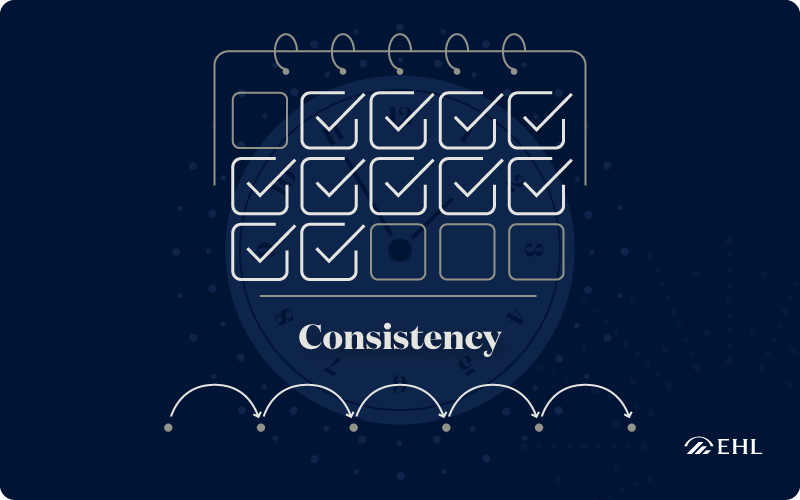
Once you've identified pain points, it's a good idea to bring in an expert who can support and track personnel's progress over time, or to create a system to do so yourself. Businesses oftentimes organize one-off trainings, but if you don't have a system in place to ensure the teachings of the training are implemented afterward, you might as well not organize them at all.
Behavioral change happens through repetition, and in an industry that can get as hectic as hospitality, it's a lot to ask staff to work on something as hard as changing how they relate to others entirely through discipline.
If you're a manager, organize regular check-ins and self-assessments to allow staff to track their progress and, most of all, keep their emotional intelligence development top of mind. Just like learning how a new booking system works or how to serve a meal elegantly, one needs to constantly practice their EI skills to improve them successfully.
And if you're a hospitality student or not part of management, you can take ownership of your progress by choosing one skill at a time to work on and setting reminders for yourself to work on that skill daily. It can be as simple as repeating an affirmation to yourself each time your shift starts. For example: "Today, I will give all guests my full attention when they're speaking."
3. Be Realistic
Implementing something new when things are crazy is a lot harder than when staff can take the time to pause and reflect. Evaluate which times of the year are more suitable for learning and skill development, and prepare for them. When staff can train and consciously practice new skills during calmer moments, they'll be better equipped when high season comes around.
Emotional Intelligence: a Hospitality Must
A good hospitality business hinges on its people skills. Staff members needs to be able to confidently navigate the needs of guests, coworkers, and leadership without ignoring their own. Mastering the emotional intelligence skills list in this article is crucial for ensuring an environment in which everyone feels heard and in control of their actions.
It's only in such an environment that personnel can perform at its best while feeling appreciated, and guests leave feeling impressed by the care they've received.